

Volem Purpurina is a non-profit association dedicated to health and social causes.
Within the organisation there is a section called AGAFA’m. This section focuses on supporting cancer patients and organising initiatives to raise funds for research into this disease. It supports breast cancer research projects.
In recent years, walks, cycle rides, calçotadas and other community activities have been organised in the Viladrau (Osona) area. The Association always provides a donation box for participants.
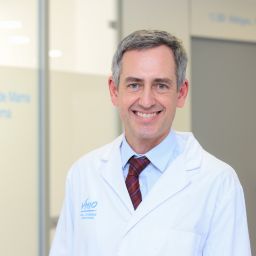
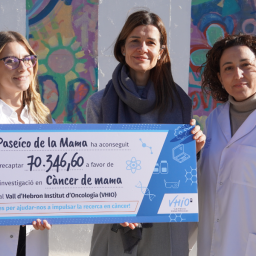
This year, Ariadna Gomis and Mireia Coderch visited VHIO to present a cheque for 1.500€ to Dr Santiago Escrivá, oncologist in the Breast Unit at Vall d’Hebron University Hospital and researcher at VHIO’s Breast Cancer Group.
“We are grateful that you support us and organising such wonderful activities. Thanks to this donation, we can continue funding the PORTRAIT project and analysing more patient samples,” explained Dr Escrivá.
The PORTRAIT-TNBC project analyses immune system signals that predict response to breast cancer treatment
The PORTRAIT-TNBC project aims to identify which patients with early triple-negative breast cancer (eTNBC) are most likely to respond to a treatment combining chemotherapy and immunotherapy.
Ariadna Gomis, who was diagnosed with triple-negative breast cancer, said: “We are very proud to contribute our small part to fund this project and support further research into this type of breast cancer.”
Triple-negative breast cancer affects one in ten women with localised breast cancer. Although it is usually the most aggressive subtype, significant advances have been made in recent years. These advances include the combination of chemotherapy with an immunotherapy drug called pembrolizumab.
The PORTRAIT-TNBC project seeks to determine which patients need this drug and which do not, thereby avoiding unnecessary treatment.
The project aims to understand why these response differences occur. To do so, researchers will analyze immune system cells (T lymphocytes) in blood and tumour tissue samples, both before and during treatment. The goal is to identify which immune signals predict whether a patient will respond to treatment and experience side effects.
This information will enable treatments to be personalised, avoiding unnecessary therapies in some cases or reducing their duration in patients with excellent responses. The ultimate objective is to improve treatment tolerance and positively impact patients’ quality of life without compromising cure chances.
In the future, the PORTRAIT-TNBC project aims for oncology teams in any hospital to have access to an application, based on these findings, to support rapid and personalised decision-making in selecting the most appropriate treatment for each patient.
At the Vall d’Hebron Institute of Oncology (VHIO), we sincerely thank Volem Purpurina for organising these charitable initiatives, which make it possible to continue supporting this project.