

This year, Vall d’Hebron Barcelona Hospital Campus commemorated World Cancer Day with a public talk at Palau Robert, coinciding with the hospital’s 70th anniversary and the 20th anniversary of the Vall d’Hebron Institute of Oncology (VHIO). The event was introduced yesterday by the Director of Clinical Care at Vall d’Hebron University Hospital, María José Abadías, and the Director of the Vall d’Hebron Research Institute (VHIR), Begoña Benito, highlighting the value of translational research, collaboration between professionals and patients, and the key role of the campus in improving survival. The collaboration between the hospital, VHIO and VHIR has positioned Vall d’Hebron as a biomedical reference centre, where scientific advances move from the laboratory to clinical practice and have a direct impact on patients.
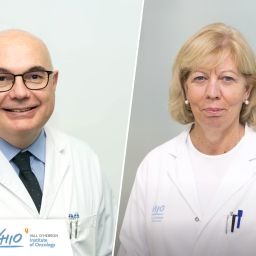
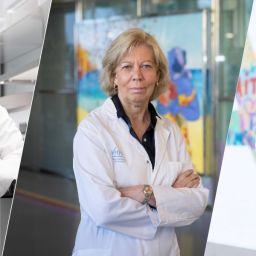
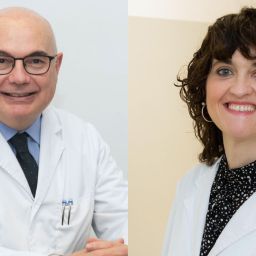
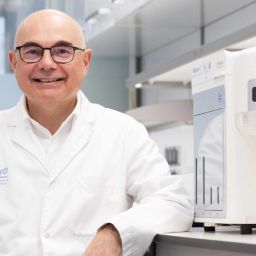
The event brought together patients, families and members of the public at Palau Robert, which this autumn has hosted the exhibition “70 years building Vall d’Hebron with you”. For a couple of hours, the casual flow of tourists gave way to a space for sharing concerns, experiences and questions about cancer with two leading figures: Dr Josep Tabernero, Head of the Medical Oncology Department and Director of VHIO, and Dr Lucas Moreno, Head of Paediatric Oncology and Haematology.
Both combined scientific outreach with practical messages. “Eat well, spend 30 minutes cooking, don’t smoke and exercise,” they insisted. The audience responded with warmth and appreciation. “I’m proud to be a patient at Vall d’Hebron, you are an amazing team,” said one attendee.
Rising cancer rates among young people
The advice is crucial. Cancer incidence continues to rise. This year, more than 300,000 new cases will be diagnosed in Spain, a 2% increase compared to 2025, according to the Spanish Society of Medical Oncology (SEOM). Cases are also increasing among people under 50, with an estimated 8,000 young individuals expected to receive a diagnosis. Of particular concern is the slight rise in the 20–29 age group, which oncologists associate with unhealthy lifestyle habits.
Amid these figures, the most significant data point is the improvement in survival, which has doubled over the past 40 years. It currently stands at around 60% and could reach 70% in the coming years. In some tumours, such as testicular cancer, survival exceeds 94%, and in breast cancer it reaches 91%. “We want to conduct more research to better understand the causes and continue improving survival,” emphasised Dr Josep Tabernero.
Lifestyle habits and prevention
The specialists stressed the central role of lifestyle habits. Only 10% of tumours have a hereditary origin; the rest are linked to environmental and behavioural factors. In adults, most tumours are associated with ageing and exposure to environmental factors. “Only 10% of cancers are hereditary,” Dr Tabernero reminded attendees. Diet is the main avoidable risk factor, accounting for 30–35% of cases. Obesity contributes between 10% and 20%, and alcohol between 4% and 6%. Specialists advised reducing ultra-processed foods, prioritising fresh products and returning to a Mediterranean diet. “It’s not about never drinking a Coca-Cola again, but instead of having it every day, having it occasionally at the weekend, like we used to,” the doctors suggested.
That smoking kills is clearly stated on tobacco packaging, yet people continue to smoke. Cigarettes cause 30% of tumours and nearly 90% of lung cancers. Oncologists also warned about sedentary lifestyles and the excessive use of antibiotics, which can disrupt the microbiota.
Physical exercise, they highlighted, is key both for prevention and quality of life. It can reduce the risk of several tumours by up to 30%. “If we take very good care of ourselves, we can prevent 45% of cancers, and if we do reasonably well, 40%,” summarised Dr Josep Tabernero.
The challenges of childhood cancer
Childhood cancer has its own reality: it is considered a rare disease but has a high emotional impact. It accounts for only 1% of all neoplasms, yet it is the second leading cause of death among children and adolescents, after accidents. Around 1,000 cases are diagnosed each year in Spain, between 100 and 120 of them at Vall d’Hebron. To raise awareness and strengthen research, Lucas Moreno called for more resources and greater social involvement. “We cannot wait; we must improve research today, and we must do so together with patients and families,” he stated.
In children, prevention plays a limited role. Mutations are linked to development, and the causes are still not fully understood. Nevertheless, five-year survival has increased to 83.9% in children aged 0 to 14, according to the Spanish Registry of Childhood Tumours.
Lung cancer, the leading cause of cancer death in women
Looking ahead to 2026, the most frequently diagnosed tumours will continue to be colorectal, breast, lung, prostate and bladder cancers. Among women, lung cancer is already the leading cause of cancer-related death, surpassing breast cancer, as a result of the later uptake of smoking. In men, however, this tumour is beginning to decline.
The overall increase in diagnoses is explained by population ageing, exposure to avoidable risk factors, and also by improvements in early detection programmes.