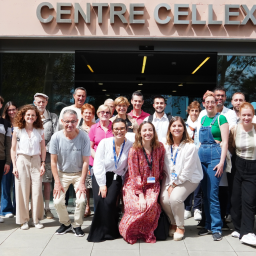


As part of the Severo Ochoa Patient and Citizen Involvement Programme, the 4th Patient Day was held on 10 April, this year focusing on gastric cancer research.
The conference ‘Stomach and oesophageal cancer research and healthy lifestyles’ was divided into two main sections, the first highlighting the importance of healthy habits and nutrition in gastric cancer patients, and the second focusing on the approach to stomach and oesophageal cancer and research into this type of tumour.
VISIBILIZING STOMACH AND OESOPHAGEAL CANCER
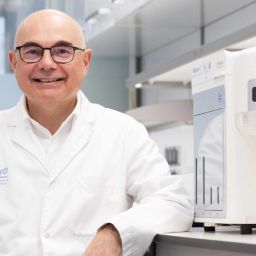
Dr. Daniel Acosta, oncologist at Vall d’Hebron University Hospital and researcher at VHIO’s Upper Gastrointestinal and Endocrine Tumours Group, opened the conference by highlighting the importance of giving a greater voice to patients with gastroesophageal cancer, a type of cancer that affects many patients but is not as visible.
According to SEOM[1] data, it is estimated that in Spain in 2025, 2,300 people will be diagnosed with oesophageal cancer and 7,136 with stomach cancer. This figure is growing every year and is currently the ninth leading cause of cancer in Spain.
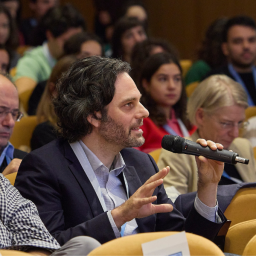
Dr. Acosta thanked the positive reception of the conference and spoke about the importance of communicating the latest advances and treatments to patients. He also spoke about the importance of having a space to share experiences with each other: “Patients are at the centre. We want them to be able to tell us how they feel, what doubts they have about the treatment or what their needs are. This will enable us to continue researching this disease,” he said.
During the conference, it was discussed how, in recent years, patients’ prognosis has improved significantly. This is thanks to the increasing availability of therapeutic options, advances in surgical techniques and a deeper understanding of the disease.
NUTRITIONAL HABITS, AN ADDITIONAL ELEMENT IN TREATMENT
Nutrition is a fundamental element in managing the side effects of treatments, explained Adriana Alcaraz, nutritionist and dietician in VHIO’s Colorectal Cancer Group.
She explained in detail some practical tips on healthy eating, how to improve tolerance to certain foods and how to ensure a good nutritional intake during treatment. It was also mentioned how adapted physical exercise can help during treatment and subsequent recovery.
THE TREATMENT OF CANCER OF THE STOMACH AND ESOPHAGUS
The role of surgery and oncological research in this type of tumour was also discussed, as well as the functioning of the drug regulatory process. Surgery plays an essential role in gastro-oesophageal tumours and the importance of having a multidisciplinary team to define the best therapeutic strategy for each patient was underlined.
Dr. Eduardo Terán, medical oncologist at Vall d’Hebron University Hospital and researcher at VHIO’s Upper Gastrointestinal and Endocrine Tumours Group, explained how oncology has advanced over the years in the treatment of this type of tumour and how teamwork with surgeons, nutritionists, pathology and radiology staff can help to define more precisely what each patient needs.
One of the relevant issues discussed was the relationship between patients and healthcare staff. Nowadays, we are working towards two-way communication between patient and oncologist to have more information about their needs and side effects because of the treatments.
From VHIO, specifically from the Upper Gastrointestinal and Endocrine Tumours Group, research is being carried out to deepen the molecular knowledge of the disease. This is to identify potentially treatable molecular alterations in gastro-oesophageal tumours.
Dr. Terán said: “Now, thanks to the information we have, we can do more research on how to reduce the toxicities of the drugs that are developed, one of the most important challenges ahead of us”.
The day ended with two round tables where patients exchanged doubts and opinions. The first-round table was attended by Pep Gatell, patient and artistic director of La Fura dels Baus and Ramon Perisé, head of R&D at the Mugaritz restaurant. They explained the project ‘Que el miedo no te cierre la boca’ (Don’t let fear close your mouth).
A final round table was held on the last day, led by Dr. Daniel Acosta, and attended by Pilar Ruiz, patient and president of the Association against gastric cancer and gastrectomized patients, and Jose Bau Jover, a patient who has been diagnosed with oesophageal cancer. During the discussion, side effects and after-effects were discussed, as well as how to improve the early detection of these tumours.
[1] Sociedad Española de Oncología Médica (SEOM). (2025). Las cifras del cáncer en España 2025. https://seom.org/images/LAS_CIFRAS_DMC2025.pdf