
Our research group has focused on improving the management of patients with lymphoid malignancies. These diseases are clinically and biologically heterogeneous, and patients who relapse often face limited therapeutic options and poor prognosis. Through a combination of clinical trials, national and international collaborative studies, real-world analyses, and translational studies, we have contributed to advancing more effective and personalized treatment strategies.
From the clinical standpoint, we have participated in 72 clinical trials, including 35 early-phase studies, evaluating novel treatment strategies in patients with lymphoid malignancies.
A central focus of our research has been the integration of innovative immunotherapies into clinical practice.
We have contributed to clinical trials assessing bispecific antibodies in heavily pretreated patients, and more recently as a front-line treatment for patients, including patients with both aggressive and indolent lymphomas. Additionally, we have analyzed the outcomes of these treatments outside of clinical trials, showing that these therapies are feasible and effective in real-world populations, including patients with high-risk clinical features. This work has helped validate the broader applicability of immunotherapy and supported its incorporation into routine care for patients with relapsed/refractory lymphomas.
By incorporating translational analyses, we have highlighted the importance of biological characterization in identifying patients most likely to benefit from immunotherapeutic approaches. Our translational studies have also contributed to identifying new biomarkers of progression as well as understanding how standard of care targeted therapies can immunomodulate the tumoral microenvironment and how this can be leveraged to propose new combinations of targeted and immunotherapy. In this sense, another focus of our work has been the study of immune evasion mechanisms in primary central nervous system lymphoma (PCNSL), with particular emphasis on the dynamic interaction between macrophages and T lymphocytes in the context of immune checkpoint blockade therapies.
Another key contribution has been the evaluation of novel therapeutic strategies in patients with chronic lymphocytic leukemia (CLL). In particular, we have participated in the first study comparing the two main current treatment strategies in CLL: continuous versus fixed-duration treatment strategies. Such data are essential for understanding how to better use novel treatments in everyday practice for patients with CLL.
Overall, our research reflects a commitment to bridging clinical innovation and real-world application. By advancing immunotherapy strategies, contributing robust outcome data, and performing translational research, our work has helped expand therapeutic options and improve the outlook for patients with lymphoid malignancies.

- Develop preclinical models that mimic the tumor microenvironment using primary cells, transgenic mouse models, PDX models, and 3D ex-vivo cultures to assess new treatment modalities.
- Translate preclinical research into clinical interventions for the benefit of patients, through promoting early-phase clinical trials and identifying new biomarkers with predictive and prognostic value.
- Gain a deeper understanding of the crosstalk mechanisms between tumor cells and the microenvironment that guide the development of personalized, more efficient immunotherapies. In particular, evaluate the genetic and immune determinants of the response to T-cell-engaging bispecific antibodies.
- Evaluate ctDNA dynamics in lymphoma as a biomarker of disease burden and response to treatment.
- Determine therapeutic vulnerabilities of persistent resistant cells to targeted therapy.
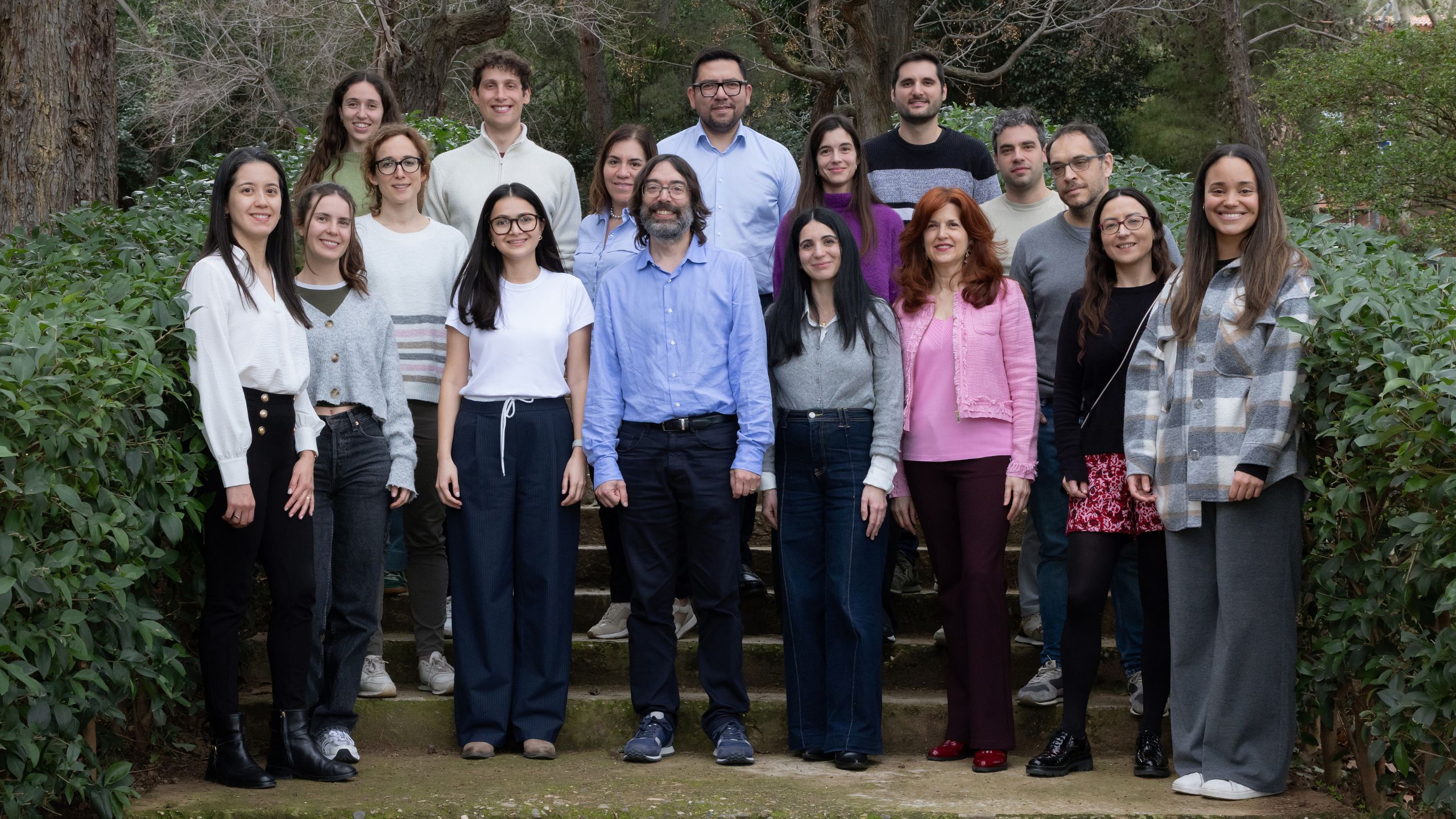
Group Leader
Pau Abrisqueta
Translational Research Coordinator
Marta Crespo
Postdoctoral Scientists
Pamela Acha (geneticist), Rubén Chazarra (bioinformatician), Iñaki Salvador (immunologist), Daniel Medina-Gil
Predoctoral Researchers
Maite Ergüin, Patricia Fernández, Sofía Mallorquí
Technician
Marina Corominas
Clinical Data Manager
Laura Campi
Hematologists
Marc Bosch, Cecilia Carpio, Inmaculada Fernández, Cristina García, Merche Gironella, Gloria Iacoboni, Ana Marín, Teresa Quiñones, Ángel Serna
- Al-Sawaf O, Stumpf J, Zhang C, Simon F, Bosch F, Feyzi E, Ghia P, Gregor M, Kater AP, Lindström V, Mattsson M, Niemann CU, Staber PB, Tadmor T, Thornton P, Wendtner CM, Janssens A, Noesslinger T, Bohn JP, da Cunha-Bang C, Poulsen CB, Ranti J, Illmer T, Schoettker B, Böttcher S, Gaska T, Vandenberghe E, Clifford R, Benjamini O, Frustaci AM, Scarfò L, Sportoletti P, Schreurs J, Levin MD, van der Straaten H, van der Klift M, Tran H, de la Serna J, Loscertales J, Lindblad O, Bergendahl Sandstedt A, Goede J, Baumann M, Fink AM, Fischer K, Ritgen M, Kreuzer KA, Schneider C, Tausch E, Stilgenbauer S, Robrecht S, Eichhorst B, Hallek M; CLL17 Trial Investigators. Fixed-Duration versus Continuous Treatment for Chronic Lymphocytic Leukemia. N Engl J Med. 2025 Dec 6. doi: 10.1056/NEJMoa2515458.
- Hutchings M, Sureda A, Bosch F, Larsen TS, Corradini P, Avigdor A, Terol MJ, Dominguez AR, Pinto A, Skarbnik A, Cordoba R, Jørgensen JM, Zinzani PL, Leung W, Bottos A, Li D, Relf J, Tandon M, Sellam G, Gritti G. Efficacy and Safety of Glofitamab Plus Polatuzumab Vedotin in Relapsed/Refractory Large B-Cell Lymphoma Including High-Grade B-Cell Lymphoma: Results From a Phase Ib/II Trial. J Clin Oncol. 2025 Dec 20;43(36):3788-3798.
- Morschhauser F, Salles G, Sehn LH, Herrera AF, Friedberg JW, Trněný M, Lenz G, Sharman JP, Herbaux C, Burke JM, Matasar M, Collins GP, Mehta-Shah N, Oberic L, Chauchet A, Jurczak W, Song Y, Pinto A, Rai S, Izutsu K, Greil R, Mykhalska L, Bergua-Burgués JM, Cheung MC, Shin HJ, Hapgood G, Munhoz E, Abrisqueta P, Gau JP, Jiang Y, McCall B, Chohan S, Sugidono M, Yan M, Batlevi CL, Tilly H, Flowers CR. Five-Year Outcomes of the POLARIX Study Comparing Pola-R-CHP and R-CHOP in Patients With Diffuse Large B-Cell Lymphoma. J Clin Oncol. 2025 Dec 10;43(35):3698-3705.
- Medina-Gil D, Palomo L, Navarro V, Lázaro G, Martín-Mur B, Hernández C, Castells O, Sánchez B, Muñoz-Torres PM, Pagès C, Pujadas G, Esteve-Codina A, Cabirta A, Ferrà C, Alcoceba M, Terol MJ, Andreu R, Martí M, Abrisqueta P, Bosch F, Crespo M. Bruton tyrosine kinase covalent inhibition shapes the immune microenvironment in chronic lymphocytic leukemia. Haematologica. 2025 Aug 1;110(8):1758-1773.
Related News