
Cellular immunotherapy has transformed the therapeutic landscape of hematologic malignancies, with chimeric antigen receptor (CAR) T-cell therapy achieving durable remissions in selected patient populations. Despite these advances, important clinical challenges remain, including disease relapse, antigen escape, limited persistence of engineered cells, and treatment-related toxicities. Moreover, many hematologic diseases still lack effective cellular therapy approaches.
The Cell Engineering and Hematologic Immunotherapy Group focuses on addressing these limitations through an integrated clinical and translational research strategy. Our team brings together hematologists and preclinical scientists working at the interface of clinical hematology, synthetic biology, and cell engineering, enabling the rapid translation of clinically driven questions into innovative therapeutic solutions. Clinical observations directly inform our research priorities, while engineering strategies are developed with a clear path toward clinical implementation.
Our research is centered on the development of next-generation CAR T-cell therapies designed to improve specificity, safety, and durability of response. We pursue multiple complementary strategies, including combinatorial antigen targeting, receptor architecture optimization, and genome-editing approaches aimed at enhancing T-cell function. Through systematic engineering and functional screening approaches, we seek to generate more effective and reliable cellular therapies for patients with hematologic malignancies.
In parallel with our cell engineering programs, the clinical arm of our lab focuses on improving each stage of the CAR T-cell therapeutic pathway. Our clinical research efforts aim to optimize lymphodepletion regimens, T-cell fitness at leukapheresis, and the identification of biomarkers predictive of response and treatment-related toxicity. We also investigate the influence of prior treatment exposures on CAR T-cell outcomes and explore rational combination strategies designed to enhance the efficacy and durability of cellular therapies. By integrating clinical data with longitudinal biological samples and mechanistic studies, these initiatives seek to refine CAR T-cell treatment strategies and maximize clinical benefit for patients with hematologic malignancies.
Our research group is embedded within the Vall d’Hebron campus and closely integrated with the Hematology Department and the Advanced Therapies Unit at Vall d’Hebron University Hospital. Approximately 70 patients receive CAR T-cell therapy annually, providing a unique translational environment that connects clinical practice with laboratory research. This setting has enabled the establishment of a longitudinal biobank containing more than 400 samples from CAR T-treated patients, offering an invaluable resource to investigate mechanisms of resistance and relapse, identify molecular determinants of response, and discover predictive biomarkers that may guide patient selection and treatment optimization.
Through this integrated clinical-preclinical framework, our lab aims to develop next-generation cellular immunotherapies capable of delivering more durable responses and expanding the therapeutic potential of engineered immune cells for hematologic malignancies.
- Advance the development of next-generation CAR T-cell therapies with improved specificity, safety, and persistence through innovative cell engineering approaches.
- Strengthen the integration between clinical hematology and translational research, leveraging clinical observations and patient-derived samples to guide therapeutic innovation.
- Expand our cell engineering platforms, including modular CAR design and genome-editing strategies aimed at enhancing T-cell functionality.
- Identify and validate novel therapeutic targets in hematologic malignancies through collaboration with genomic and molecular profiling initiatives within VHIO.
- Consolidate and expand the CAR T longitudinal biobank to support translational studies aimed at understanding resistance, relapse, and treatment-related toxicities.
- Foster strategic collaborations with academic groups and industry partners to accelerate the development of innovative cellular immunotherapy approaches.
- Promote the translation of discoveries into early-phase clinical trials, enabling the clinical evaluation of novel cell engineering strategies developed within the laboratory.
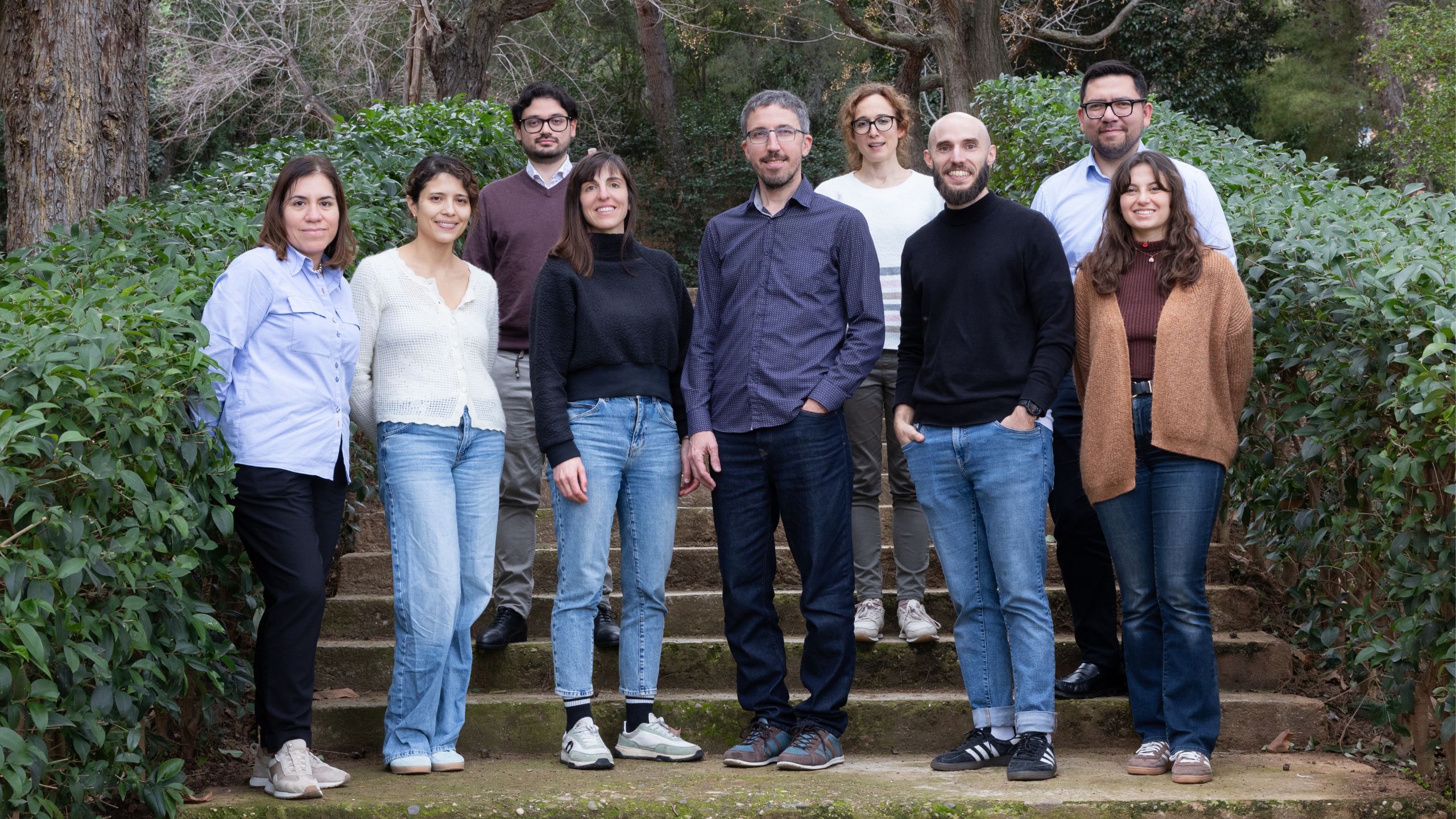
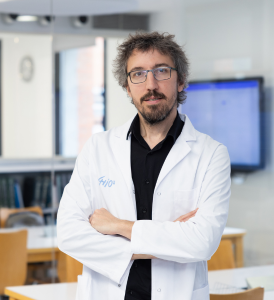
Group Leader
Pere Barba
Senior Scientists
Jana de Sostoa, Martí Farrera-Sal
Hematologist and Clinical Investigators
Cecilia Carpio, Samantha Feijoo, Gloria Iacoboni, Alfredo Rivas, Mario Sánchez Salinas
Master’s Students
Sara Delucchi, Carmen Megías
“CARtun Platform: fine-tuning Chimeric Antigen Receptor design to enhance CAR T-cell therapy across hematological malignancies”. PI:Martí Farreras. Execution period: 1/03/2026 – 28/02/2027. Funded by:European Hematology Association.
ICI22/00088, Design and implementation of an open-label Phase I Clinical Trial of dose escalation using p95HER2 CARHER2 BiTE T cells in patients with advanced P95HER2-positive solid tumors. Instituto de Salud Carlos III. Irene Braña. (Fundació Institut de Recerca de l’Hospital Univ. Vall d’Hebron). 01/01/2023-31/12/2026. €1,062,253.5. Team member.
ICI20/00076, Next generation TIL therapy targeting neoantigens for immune checkpoint blockade-resistant tumors. Instituto de Salud Carlos III. Elena Garralda Cabanas. (Fundació Institut de Recerca de l’Hospital Univ. Vall d’Hebron). 01/01/2021-31/12/2026. €981,917.2. Team member.
I21/00197, Optimization of fluradabine lymphodepleting chemotherapy prior to chimeric antigen receptor T-cell (CAR T) therapy infusion in patients with renal impairment. Instituto de Salud Carlos III. Pere Barba Suñol. (Fundació Institut de Recerca de l’Hospital Univ. Vall d’Hebron). 01/01/2022-31/12/2025. €111,320. Principal investigator.
RD21/0017/0035, RICORS TERAV. Instituto de Salud Carlos III. Francesc Bosch Albareda. (Fundació Institut de Recerca de l’Hospital Univ. Vall d’Hebron). 01/01/2022-31/12/2025. €168,917.1. Team member.
INT23/00072, Intensification of the optimization project of fludarabine lymphodepleting chemotherapy prior to chimeric antigen receptor T-cell (CAR-T) therapy infusion in patients with renal impairment. Instituto de Salud Carlos III. Pere Barba Suñol. (Fundació Institut de Recerca de l’Hospital Univ. Vall d’Hebron). 01/01/2024-31/12/2024. €30,000. Principal investigator.
Redirection of T cells against HER2-targeted tumors. Spanish Association Against Cancer. Arribas J. (Fundació Privada Institut d’Investigació Oncològica de Vall d’Hebron (VHIO)). 23/11/2019-22/11/2024. €996,992. Team member.
RTC-2017-6368-1, T-CELBANC: Creation of a national bank of specific T lymphocytes for immediate use in post-transplant opportunistic infections. Ministry of Science and Innovation. Universities. Guillermo Sanz. (Banc de Sang i Teixits and Fundació Privada Institut d’Investigació Oncològica de Vall d’Hebron (VHIO)). 01/01/2019-31/12/2023. €696,772.4. Team member.
IDEAS19106BARB, Optimization of the use of checkpoint inhibitors in patients with lymphoid neoplasms receiving an allogeneic hematopoietic progenitor transplant. Scientific Foundation of the Spanish Association Against Cancer. Pere Barba Suñol. (Fundació Privada Institut d’Investigació Oncològica de Vall d’Hebron (VHIO)). 01/08/2019-01/03/2022. €20,000. Principal investigator.
PI16/01433, Use of third-party specific T lymphocytes against viral antigens, from a registry of voluntary donors, for the treatment of CMV, EBV and adenovirus infections in recipients. Instituto de Salud Carlos III. Pere Barba Suñol. (Fundació Privada Institut d’Investigació Oncològica de Vall d’Hebron (VHIO)). 01/01/2017-30/06/2021. €122,810. Principal investigator.
BDNS357800, Immunological studies in hematopoietic progenitor transplantation. A translational approach. Department of Health of the Government of Catalonia. Pere Barba Suñol. (Fundació Institut de Recerca de l’Hospital Univ. Vall d’Hebron). 01/01/2018-1/12/2019. €101,808. Principal investigator.
Study of high-dose methotrexate patterns of use, supportive care, clearance, toxicities and outcomes. BTG International. Pere Barba Suñol. (Fundació Privada Institut d’Investigació Oncològica de Vall d’Hebron (VHIO)). From 01/01/2022. Principal investigator.
ICI24/00050, Phase I/II dose clinical trial to evaluate safety and efficacy of GMP-expanded CMV-specific T lymphocytes from third-party bank donors to treat refractory CMV infection after allo-HSCT. (Instituto de Investigación Sanitaria Incliva). From 01/01/2017. €517,101.66. Team member.
- Iacoboni G, Rejeski K, Navarro V, van Meerten T, Rampotas A, Martín-López AÁ, Bastos M, Benzaquén A, Reguera-Ortega JL, Carpio C, Roddie C, López-Corral L, Delgado-Serrano J, Landwehr M, Stock S, Silva de Tena P, Abrisqueta P, de Boer J, Martin Garcia-Sancho A, Hernani R, Kwon M, Subklewe M, O’Reilly M, Barba P. Site-specific analysis of extranodal involvement in large B-cell lymphoma reveals distinct efficacy with chimeric antigen receptor T-cell therapy. Leukemia. 2025 May;39(5):1196-1205.
- Camacho-Arteaga L, Iacoboni G, Kwon M, Bailén R, Hernani R, Benzaquén A, López-Corral L, Pérez-López E, Leguízamo-Martínez LM, Calvo-Orteu M, Guerreiro M, Balaguer-Rosello A, Alonso-Martínez C, Vidal X, Barba P, Agustí A. Late Adverse Events After Chimeric Antigen Receptor T-Cell Therapy for Patients With Aggressive B-Cell Non-Hodgkin Lymphoma. JAMA Netw Open. 2025 Feb 3;8(2):e2461683.
- Bastos-Oreiro M, Iacoboni G, Garcés VN, Caballero AC, Martínez N, Delgado J, Balaguer A, Kwon M, Gonzalez de Villambrosia S, Hernani R, Jimenez-Ubieto A, Bailen R, Zaberio I, Martín García-Sancho A, Barba P. Chimeric antigen receptor T-cell therapy outcomes in T cell/histiocyte-rich large B-cell lymphoma and subsequent treatment strategies after disease progression: A GELTAMO/GETH study. Hemasphere. 2025 Feb 4;9(2):e70077.
- Iacoboni G, Morschhauser F. Building the future management of follicular lymphoma with T-cell-redirecting strategies. Blood. 2025 Jan 9;145(2):170-175.
- Gloria Iacoboni; Emil Kyvsgaard; Víctor Navarro; et al; Pau Abrisqueta; (32/33) Pere Barba (AC). 2026. Impact of Prior Bendamustine Exposure on Bispecific Antibody Outcomes in Relapsed/Refractory Follicular Lymphoma. Blood Advances. ISSN 2473-9529. WOS (23,01) https://doi.org/10.1182/bloodadvances.2025018546
- Gloria Iacoboni; Kai Rejeski; Víctor Navarro; et al; (24/24) Pere Barba (AC). 2025. Site-specific analysis of extranodal involvement in large B-cell lymphoma reveals distinct efficacy with chimeric antigen receptor T-cell therapy. Leukemia. 39-5, pp.1196-1205. ISSN 0887-6924. WOS (30,66) https://doi.org/10.1038/s41375-025-02582-x
- Lina Camacho Arteaga; Gloria Iacoboni; Mi Kwon; et al; Antònia Agustí; (15/16) Pere Barba. 2025. Late Adverse Events After Chimeric Antigen Receptor T-Cell Therapy for Patients With Aggressive B-Cell Non-Hodgkin Lymphoma. JAMA Network Open. 8-2, pp.e2461683-e2461683. ISSN 2574-3805. WOS (74,26) https://doi.org/10.1001/jamanetworkopen.2024.61683
- Claire Roddie; Karamjeet S Sandhu; Eleni Tholouli; et al; Elias Jabbour; (6/31) Pere Barba. 2024. Obecabtagene Autoleucel in Adults with B-Cell Acute Lymphoblastic Leukemia. New England Journal of Medicine. 391-23, pp.2219-2230. ISSN 0028-4793. WOS (397,32) https://doi.org/10.1056/NEJMoa2406526
- Gloria Iacoboni; Víctor Navarro; Pierre Sesques; et al; Pau Abrisqueta; (29/31) Pere Barba. 2024. Development and validation of the post-CAR prognostic index for large B-cell lymphoma patients after CAR-T progression in third or later line treatment. Journal of Hematology & Oncology. 17-1, pp.102-102. ISSN 1756-8722. WOS (27,07) https://doi.org/10.1186/s13045-024-01608-8
- Gilles Crochet; Gloria Iacoboni; Audrey Couturier; et al; Houot Roch; (24/26) Pere Barba (AC). 2024. Efficacy of CAR T-Cell Therapy is Not Impaired by Previous Bispecific Antibody Treatment in Large B-Cell Lymphoma. Blood. 144-3, pp.334-338. ISSN 0006-4971. WOS (165,82) https://doi.org/10.1182/blood.2024024526
- Gloria Iacoboni; Mario A Sánchez-Salinas; Kai Rejeski; et al; (24/24) Pere Barba (AC). 2024. Efficacy and safety of bendamustine-containing bridging therapy in R/R LBCL patients receiving CD19 CAR T-cells. HemaSphere. 8-7, pp.e86-e86. ISSN 2572-9241. WOS (3,39) https://doi.org/10.1002/hem3.86
- Gloria Iacoboni; Víctor Navarro; Ana África Martín-López; et al; (24/24) Pere Barba (AC). 2024. Recent Bendamustine Treatment Before Apheresis Has a Negative Impact on Outcomes in Patients With Large B-Cell Lymphoma Receiving Chimeric Antigen Receptor T-Cell Therapy. Journal of Clinical Oncology. 42-2, pp.205-217. ISSN 0732-183X. WOS (169,48) https://doi.org/10.1200/JCO.23.01097
- Kai Rejeski; Marion Subklewe; Mahmoud Aljurf; et al; Ibrahim Yakoub-Agha; (6/37) Pere Barba. 2023. Immune Effector Cell-Associated Hematotoxicity (ICAHT): EHA/EBMT Consensus Grading and Best Practice Recommendations. Blood. 142-10, pp.865-877. ISSN 0006-4971. WOS (168,06) https://doi.org/10.1182/blood.2023020578
- Mi Kwon; Gloria Iacoboni; Juan Luis Reguera; et al; (28/28) Pere Barba. 2023. Axicabtagene ciloleucel compared to tisagenlecleucel for the treatment of aggressive B-cell lymphoma. Haematologica. 108-1, pp.110-121. ISSN 0390-6078. WOS (21,99) https://doi.org/10.3324/haematol.2022.280805
- Bishop MR; Dickinson M; Purtill D; et al; Westin JR; (4/41) Barba P. 2022. Second-Line Tisagenlecleucel or Standard Care in Aggressive B-Cell Lymphoma. New England Journal of Medicine. 386-7, pp.629-639. ISSN 0028-4793. WOS (456,89) https://doi.org/10.1056/NEJMoa2116596
- Global access to commercial CAR T cells: A cross-sectional study of health technology assessment in the G20. Blood 10.1182/blood.2025030872
- TRBC1-CAR T cell therapy in peripheral T cell lymphoma: a phase 1/2 trial. Nature Medicine 10.1038/s41591-024-03326-7
- Beyond maximum grade: tolerability of immunotherapies, cellular therapies, and targeted agents in haematological malignancies. Lancet Haematology 10.1016/S2352-3026(25)00051-1
- Brexucabtagene autoleucel for BTKi-naive relapsed/refractory mantle cell lymphoma: primary analysis of ZUMA-2 Cohort 3. Blood 10.1182/blood.2025029734
- Ehlen L, Farrera-Sal M, Szyska M, Arndt J, Schallenberg S, Scholz C, Yang M, Vollbrecht C, Löwa A, Friedrich R, Mai M, Peter L, Picht S, Schulenberg S, Geray D, Korus G, Sommerfeld A, Treue D, Strauchmann J, Elsner A, Kath J, Vallone VF, Joosten M, Klatte-Schulz F, Petersen A, Stachelscheid H, Wagner DL, Spies C, Rückert JC, Hocke AC, Polansky JK, Stark R, Klein O, Schmueck-Henneresse M. Lung tumouroids as a testing platform for precision CAR T cell therapy. Nat Biomed Eng. 2026 Jan 21. doi: 10.1038/s41551-025-01594-3. Epub ahead of print. PMID: 41565786.
- Schulenberg S, Farrera-Sal M, Loeser M, Ehlen L, Schlickeiser S, Picht S, Peter L, Mai M, Tat CL, Keye J, Kunkel D, Lin F, Rooney CM, Omer B, Schmueck-Henneresse M. Multi-parametric profiling of IL-7-augmented GD2.CART products in a phase 1 clinical trial. iScience. 2025 Oct 6;28(11):113680. doi: 10.1016/j.isci.2025.113680. PMID: 41210973; PMCID: PMC12589891.
- de Sostoa J, Marinari E, Pedard M, Widmer V, Davanture S, Schaller K, Tissot S, De Palma M, Wolf B, Orend G, Dutoit V, Migliorini D. Targeting the extracellular matrix with Tenascin-C-specific CAR T cells extends survival in preclinical models of glioblastoma. J Immunother Cancer. 2025 Nov 4;13(11):e011382. doi: 10.1136/jitc-2024-011382. PMID: 41188009; PMCID: PMC12593508.
- Hope HC, de Sostoa J, Ginefra P, Andreatta M, Chiang YH, Ronet C, Pich-Bavastro C, Corria Osorio J, Kuonen F, Auwerx J, D’Amelio P, Ho PC, Carmona SJ, Coukos G, Migliorini D, Vannini N. Age-associated nicotinamide adenine dinucleotide decline drives CAR-T cell failure. Nat Cancer. 2025 Sep;6(9):1524-1536. doi: 10.1038/s43018-025-00982-7. Epub 2025 May 20. PMID: 40394194; PMCID: PMC12463664.
Related News