

The results of the international phase 3 MATTERHORN clinical trial show that adding the antibody durvalumab, an immune checkpoint inhibitor, to the standard pre- and postoperative chemotherapy regimen improves survival in patients with localized and operable gastric or gastroesophageal junction cancer.
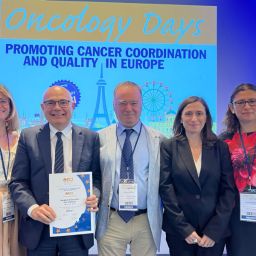
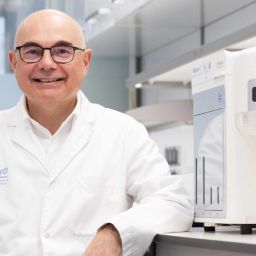
Dr. Josep Tabernero, Head of the Medical Oncology Department at Vall d’Hebron University Hospital and Director of the Vall d’Hebron Institute of Oncology (VHIO), presented these findings today at the European Society for Medical Oncology (ESMO) Congress, held from October 17 to 21 in Berlin.
A global health challenge
In 2020, 1.9 million cases of gastric cancer were diagnosed worldwide, making it the fourth leading cause of cancer-related death, after lung, colorectal, and liver cancer. Gastric and gastroesophageal junction cancer represent a global health challenge.
“Complete surgical resection is the cornerstone of treatment for localized gastric or gastroesophageal junction cancer. In most Western countries, the FLOT three-drug chemotherapy regimen is the standard-of-care for this patient population, given before and after surgery,” said Josep Tabernero first author of the study.
“While advances in treatment have improved survival, the prognosis of patients with gastric cancer is often poor. Due to late-stage diagnosis and the aggressive nature of the disease, the overall five-year survival rate is 33% in the U.S. and 25% globally, representing an unmet clinical challenge,” added Tabernero.
The phase 3 MATTERHORN trial evaluates the effectiveness of adding an immune checkpoint inhibitor, the antibody durvalumab, to the standard pre- and postoperative chemotherapy in patients with localized and resectable gastric or gastroesophageal junction cancer, meaning those eligible for surgical treatment.
A total of 948 patients participated in the trial and were randomly assigned to receive either the FLOT chemotherapy regimen plus durvalumab or placebo plus FLOT before and after surgery.
In June, the event-free survival (EFS) results were presented at the American Society of Clinical Oncology (ASCO) Annual Meeting and published in The New England Journal of Medicine. At ESMO, the overall survival (OS) results were presented.
After a median follow-up of 43 months, patients who received immunotherapy plus FLOT showed a statistically and clinically significant improvement in overall survival compared with those who received placebo plus FLOT, with a 22% reduction in the risk of death. Although the medians were not reached in either arm, after three years of follow-up, 69% of patients treated with durvalumab were still alive, compared with 62% in the control group.
Overall survival improved across all patient subgroups, regardless of their PD-L1 expression levels or pathological nodal status.
“The results of this study show that adding immunotherapy to the standard regimen improves overall survival in patients with locally advanced and operable gastric or gastroesophageal junction cancer,” said Dr. Tabernero. “These findings support this new therapeutic strategy as a new global standard of care for this group of patients,” he concluded.
References
Session details
ESMO 2025
Proffered Paper session 1: GI tumours, upper digestive
Date
Fri, 17.10.2025
Chairs: Sarah Derks (Amsterdam, Netherlands) /Filippo Pietrantonio (Milan, Italy)
Room: Hamburg Auditorium – CityCube A
Time: 14:00 – 15:30
LBA81 – Final overall survival (OS) and the association of pathological outcomes with event-free survival (EFS) in MATTERHORN: A randomised, phase III study of durvalumab (D) plus 5-fluorouracil, leucovorin, oxaliplatin and docetaxel (FLOT) in resectable gastric / gastroesophageal junction (G / GEJ) adenocarcinoma
Josep Tabernero, Salah-Eddin Al-Batran, Zev A. A. Wainberg, Kei Muro, Daniela Molena, Eric Van Cutsem, Woo Jin Hyung, Lucjan S. Wyrwicz, Do-Youn Oh, Takeshi Omori, Markus Moehler, Arinilda Campos Bragagnoli, Gabriel E. Garbaos, Moishe Liberman, M. Luisa Limon, Elizabeth C. Smyth, Lin-Yang Cheng, Nicola