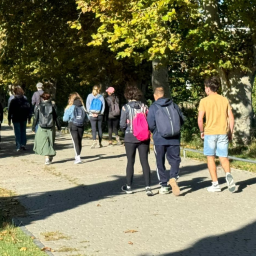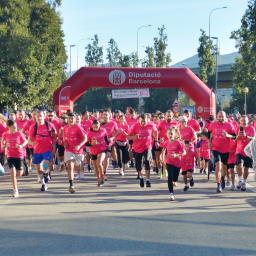

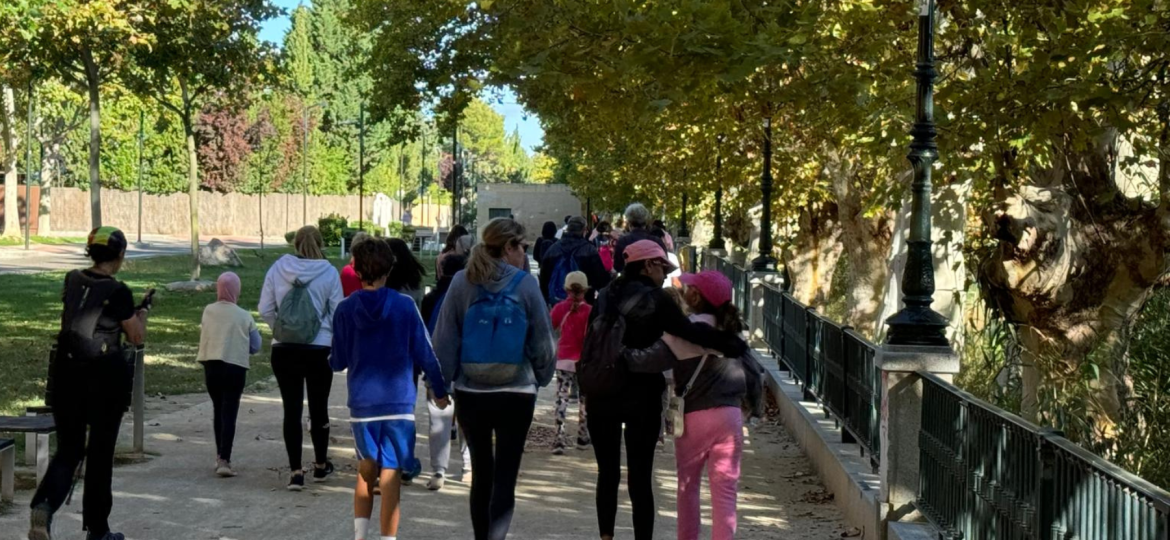
On 27 September, the iconic Paseíco de la Mama took place in Zaragoza. This charity initiative has supported the VHIO Breast Cancer Group for fifteen years.
In 2011, after learning of her daughter-in-law Inés Gasén‘s breast cancer diagnosis, Elaine Robinson decided to organise a walk along Zaragoza Street to raise funds for further research into this disease.
Fifteen years have passed since that first walk, thanks to the support received by this famous initiative. This has become an annual event for many city citizens.
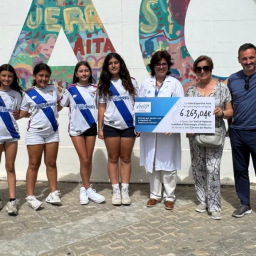
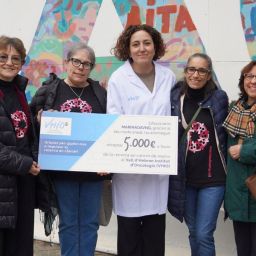
Over the years, thanks to contributions from individuals and companies, more than 500.000€ has been raised for VHIO’s Breast Cancer Group. This amount has funded a multitude of projects at the Breast Cancer Unit and initiated new lines of research.
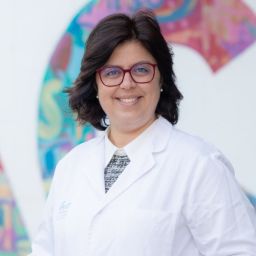
Dr. Cristina Saura, oncologist at Inés Gasén, head of the Breast Cancer Programme at Vall d’Hebron University Hospital and head of the Breast Cancer Group at VHIO, attended the Paseíco, as she does every year. At the end of the walk, Dr. Saura paid tribute to Elaine Robinson and Inés Gasén. She presented them with a commemorative plaque for their fifteen years of research support.
“Without a doubt, the Breast Cancer Walk has been fundamental in enabling us to conduct many breast cancer research projects at VHIO. Your continued commitment has allowed initial ideas to become real research projects to find better treatments for patients,” said Dr. Saura.
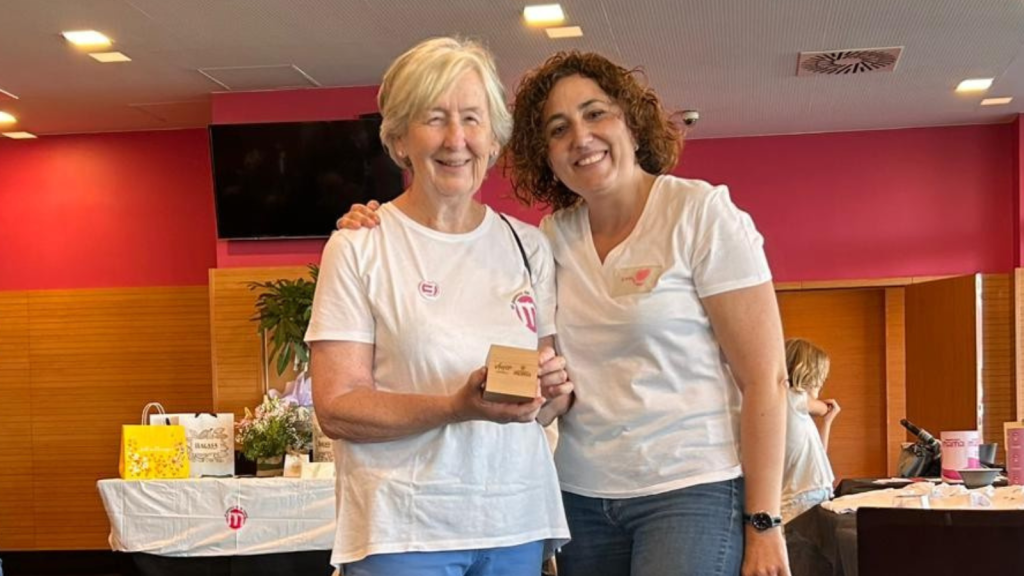
She added: “Today we would like to thank you very much for your collaboration and help over the last 15 years. Thank you, Elaine, for starting this fantastic walk; thank you, Inés, for continuing to help VHIO; and thank you to everyone for joining us every year!”
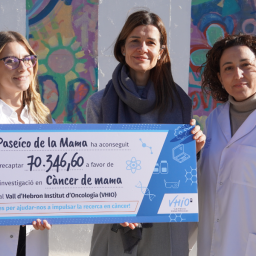
Thanks to the funds raised in the 2024 edition, more than 70.000€ was allocated to the INSP3KTION project. This project was led by Dr. Marta Perachino, a clinical researcher at VHIO’s Breast Cancer Group. It was to understand the biological changes that lead to breast cancer. Dr Perachino also attended the walk and detailed the project progress in recent months.
This year, the funds raised by the Paseíco de la Mama will be directed towards the PORTRAIT-TNBC project, led by Dr. Mafalda Oliveira, medical oncologist at Vall d’Hebron University Hospital and senior researcher at the VHIO’s Breast Cancer Group.
The PORTRAIT-TNBC project analyses immune system signals that predict response to breast cancer treatment
The PORTRAIT-TNBC project aims to identify which patients with early triple-negative breast cancer (eTNBC) will respond best to a combination of chemotherapy and immunotherapy treatments.
Triple-negative breast cancer affects one in ten women with localised breast cancer. Although it is usually the most aggressive subtype, in recent years there have been significant advances in its treatment. These advances include a combination of chemotherapy with an immunotherapy drug called pembrolizumab.
The PORTRAIT-TNBC project aims to investigate which patients need this drug and which do not. In this way, patients could be spared unnecessary treatment.
The PORTRAIT-TNBC project seeks to understand why this difference occurs. To do this, immune system cells (T lymphocytes) in blood and tumour tissue samples will be analysed in detail before and during treatment. The aim is to discover which immune system signals predict whether a patient will respond to treatment and suffer side effects.
“With this information, treatments can be personalised, avoiding unnecessary therapies in some cases or reducing their duration in patients with an excellent response. This is with the goal of improving treatment tolerance and positively impacting patients’ quality of life without reducing their chances of cure,” explains Dr. Oliveira.
In the future, the goal of the PORTRAIT-TNBC project is that, based on these results, oncology teams at any hospital can have an application that facilitates quick and personalised decision-making. With the mission of choosing the most appropriate treatment for each patient.
Thanks to the funds raised by this fifteenth edition of the Paseíco de la Mama, this research will be able to continue taking decisive steps towards more individualised care, bringing laboratory results closer to clinical practice and improving therapeutic options for this group of patients.
Thank you, Paseíco de la Mama, for your support and solidarity!