

- The BREAKWATER open-label, randomized phase 3 study was designed to evaluate first-line treatment with targeted therapies encorafenib and cetuximab plus chemotherapy compared to standard of care in patients with previously untreated BRAF V600E-mutant metastatic colorectal cancer.
- Results of primary analysis of BREAKWATER Cohort 3, presented today at the 2026 American Society of Clinical Oncology Gastrointestinal Cancers Symposium (ASCO GI), showed that this dual-targeted therapy in combination with FOLFIRI chemotherapy demonstrated a statistically significant and clinically meaningful benefit with an objective response rate of 64.4%.
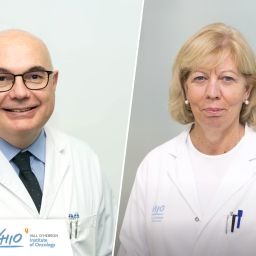
- Data from Cohort 3 of this international study—co-led by Josep Tabernero, Head of the Vall d’Hebron University Hospital’s Medical Oncology Department and VHIO’s Director, and Scott Kopetz, Professor of Gastrointestinal Medical Oncology at the University of Texas MD Cancer Center in the U.S.—support this novel combination as a potential new first-line treatment strategy against BRAF V600E-mutant mCRC.
Co-led by Josep Tabernero, Head of the Vall d’Hebron University Hospital’s Medical Oncology Department and VHIO’s Director, and Scott Kopetz, Professor of Gastrointestinal Medical Oncology at the University of Texas MD Cancer Center in the U.S., the phase 3 BREAKWATER study is evaluating the efficacy and safety of first-line treatment with BRAF inhibitor encorafenib plus EGFR inhibitor cetuximab in combination with chemotherapy versus standard of care (SOC) in previously untreated patients with BRAF V600E-mutant metastatic colorectal cancer (mCRC).
Presented today by Scott Kopetz at the 2026 American Society of Clinical Oncology Gastrointestinal Cancers Symposium (ASCO GI) Symposium, January 8-10, San Francisco, findings from primary analysis of BREAKWATER Cohort 3 showed that encorafenib and cetuximab plus the FOLFIRI chemotherapy regimen including leucovorin, 5-fluorouracil, and irinotecan, significantly improved outcomes in this patient population.
BRAF V600E-mutant mCRC
Colorectal cancer is the third most common cancer worldwide, accounting for approximately 10% of all cancer cases, and is the second leading cause of cancer-related deaths worldwide. Between 20% and 30% of patients with colon cancer have metastatic disease at the time of their initial diagnosis, and up to 50% will develop metastases during their disease course.
BRAF V600E mutations occur in 8% to 12% of cases and are associated with a poor prognosis. In 2019, results from the BEACON study directed by Josep Tabernero demonstrated that targeted therapy including encorafenib and cetuximab significantly prolonged overall survival and improved response rates compared with SOC in patients with previously treated BRAF V600E-mutant mCRC.
“Based on these data, the combination of encorafenib plus cetuximab was approved in most countries for BRAF V600E-mutant metastatic colorectal cancer in the second and third-line settings. However, first-line strategies have had limited efficacy in the treatment of this patient population,” said Josep Tabernero.
BREAKWATER: supporting a potential new first-line standard of care for previously untreated patients with BRAF V600E-mutant mCRC
BEAKWATER Cohort 3 included 147 patients who were randomly assigned to receive the investigational combination (73 patients), or standard therapy (74 patients). The objective response rate (ORR) evaluated by blinded independent central review (BICR) was 64.4% in patients who received treatment with encorafenib and cetuximab plus FOLFIRI compared to 39.2% in the control group.
After a 10.5-month follow-up, data showed a trend for overall survival improvement with the investigational combination versus control. The researchers will continue to follow patients and assess these results in the future. Results also demonstrated that the new treatment combination was well tolerated and that secondary side effects were consistent with those expected for each of the study drugs.
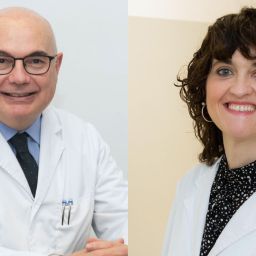
Findings from BREAKWATER Cohort 3 build on the previously reported results from the phase 3 portion of the BREAKWATER multi-part study which evaluated the combination of encorafenib and cetuximab plus a mFOLFOX6 chemotherapy regimen compared to standard therapy. Presented at the 2025 ASCO Annual Meeting by Elena Élez, a Medical Oncologist at Vall d’Hebron and Head of VHIO’s Gastrointestinal Tract Tumors Group, and published simultaneously in The New England Journal of Medicine, data showed that this combination doubled overall survival (OS) in this patient population.
“Aimed at lengthening and improving patient survival while maintaining their quality of life, these two first-line drug combinations will enable us to expand the precision oncology therapeutic arsenal against BRAF-mutant metastatic colorectal cancer,” concluded Tabernero.
###
2026 ASCO Gastrointestinal Cancers Symposium corresponding session details
Session title: Oral Abstract Session C: Cancers of the Colon, Rectum, and Annus
Track: Colorectal Cancer
Chairs: Erqi L. Pollon, MD, Stanford Hospital Clinics, Stanford, California, U.S., and Eduardo A. Guzman, MD, Tecnológico de Monterry, Monterry, Mexico
Scott Kopetz, Harpreet S. Wasan, Takayuki Yoshino, Tae Won Kim, Cathy Eng, Eric Van Cutsem, Fortunato Ciardiello, Jayesh Desai, Timothy S. Maughan, Rona Yaeger, Xiaoxi Zhang, Elena Beyzarov, Ave Mori, Xiaosong Zhang, Josep Tabernero
Presenter: Scott Kopetz, MD, PhD, FASCO, University of Texas MD Cancer Center, Houston, Texas, U.S.
Presentation date and time: Sunday, Jan 10, 22:30h – 22:40h CET
Location: Level 2 Ballroom