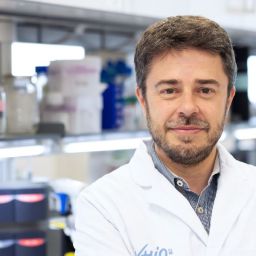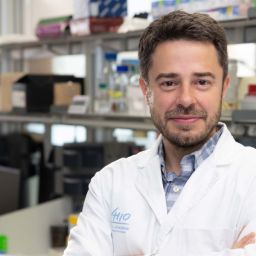

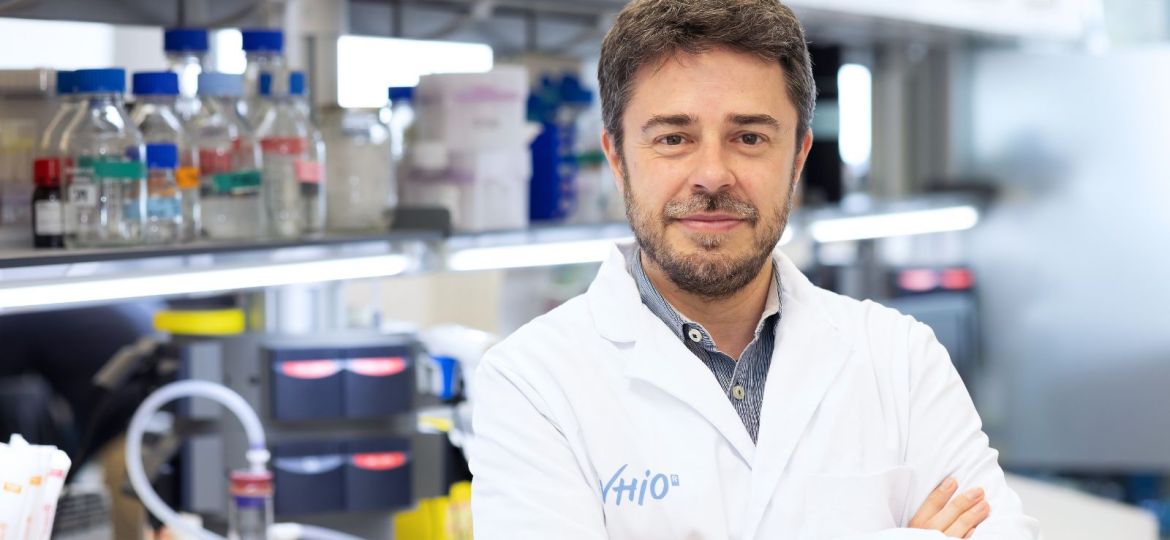
Published in JAMA Oncology*, a consensus review article compiled by a group of renowned experts sets out recommendations for the use of next-generation sequencing (NGS) in the diagnosis and clinical management of patients with sarcoma. First authored by César Serrano, Medical Oncologist at the Vall d’Hebron University Hospital and Head of VHIO’s Sarcoma Translational Research Group, the work provides guidelines on the rational and evidence-based use of these technologies in this group of rare and heterogeneous tumors.
Sarcomas comprise a broad spectrum of malignant tumors with distinct genomic architecture: some subtypes are driven by simple recurrent genetic alterations, while others are gnomically complex, characterized by extensive genomic rearrangements. There are over 70 distinct types of sarcomas, which are a group of rare tumors that develop in bone and connective tissue, such as fat, muscle, blood vessels, nerves, and cartilage.
While NGS-based technologies have become key in sarcoma diagnosis and clinical decision-making, their broad and clinically impactful implementation continues to pose significant challenges due to the rarity, heterogeneity, and biological complexity of these tumors.
From a diagnostic standpoint, the investigators recommend that
that genomic sequencing should not be routinely applied in all cases, since most diagnoses can be established using classical histological criteria. Furthermore, from a therapeutic perspective, current evidence does not support routine clinical use of NGS in all patients due to the small number of identified actionable genetic alterations. The consensus group also emphasizes that the clinical benefit of NGS-based targeted therapies is largely based on the specific subtype of disease and the scientific evidence currently available.
The selective and specialized application of NGS in patients with sarcoma
“The decision to perform an NGS panel, as well as how to interpret and use the results for diagnostic or therapeutic purposes, should only take place in sarcoma-expert institutions with multidisciplinary teams. While present evidence does not support the routine use of NGS in all patients, the specialized application of genomics will enable more accurate diagnoses and better-targeted treatments for selected patients with sarcoma,” said César Serrano.
“For the first time, we have defined when it makes sense to use NGS, how the results should be interpreted, and outlined the role that referral centers should play at each step. Moving forward, these proposed recommendations could be applied help to improve diagnoses and further support treatment decision making,” concluded Serrano.
However, the experts emphasize the need to advance insights into the underlying molecular biology of sarcomas, particularly in the context of ultra-rare subtypes of disease.
###
Reference
*Serrano C, Bauer S, Blay JY, Casali PG, Cicala CM, Dei Tos AP, Digklia A, Gelderblom H, Italiano A, Jones RL, Kasper B, Kyriazoglou A, Le Loarer F, Martín-Broto J, Napolitano A, Rutkowski P, Stacchiotti S, Tap W, Thomas D, Thway K, Valverde C, van der Graaf WTA, Wardelmann E, Bovée JVMG. Guidelines for Next-Generation Sequencing in Sarcoma Diagnosis and Treatment: A Consensus Review. JAMA Oncol. Published Online: October 16, 2025. doi: 10.1001/jamaoncol.2025.3608