

The 2025 edition of the Health Research call from the “la Caixa” Foundation has selected 34 new cutting-edge biomedical research projects, each awarded up to one million euros. The projects are led by 25 research centers, universities, and hospitals from Spain, and 9 from Portugal.
This call, to which 714 proposals for basic, clinical, and translational research were submitted in this eighth edition, is specifically aimed at addressing health challenges in various areas: neuroscience, cardiovascular and metabolic diseases, oncology, infectious diseases, and enabling technologies in any of these fields.
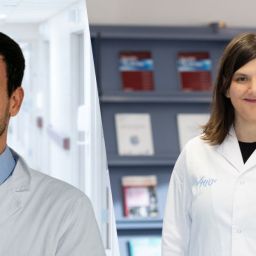
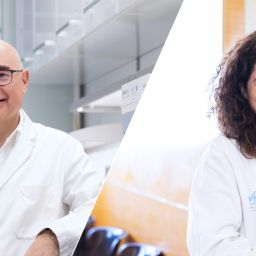
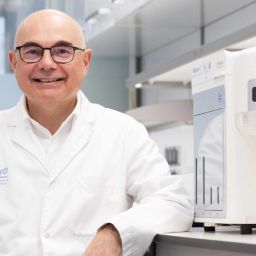
Dr. Joan Seoane, ICREA professor, director of the Tumor Microenvironment and Immuno-oncology Program, and head of Gene Expression at VHIO, has received one of the Health Research grants to study the tumor microenvironment and its impact on immunotherapy for brain cancer.
Addressing the tumor microenvironment to unlock immunotherapy for brain cancer
Glioblastoma is the most common and aggressive brain cancer, with a life expectancy of 14 months. Current treatments, such as chemotherapy and radiotherapy, have not significantly improved survival rates in the last 15 years. Moreover, it is a cancer that does not respond to immunotherapy, creating an urgent need to find effective treatments.
“This project aims to understand why glioblastoma does not respond to immunotherapy, which has been effective in other types of cancer, and use this knowledge to improve therapy against this malignant neoplasm,” explains Dr. Joan Seoane. “Our strategy will focus on the tumor microenvironment, specifically on a subset of cells, the tumor-associated macrophages, to understand their role in hindering the effectiveness of immunotherapy.”
By using innovative patient-derived models to study the impact of these cells on immunotherapy treatments, scientists can simulate the complexity of human glioblastoma. Furthermore, the researchers will analyze cerebrospinal fluid to evaluate the presence of specific mutations and these cells non-invasively.
“The goal is to identify new therapeutic targets and biomarkers that predict the response to immunotherapy and improve treatment outcomes in glioblastoma patients, and translate scientific findings into practical applications that can directly benefit patients and enable the development of new therapies and an increase in survival rates,” he concludes.
Health Research Grants from the “la Caixa” Foundation
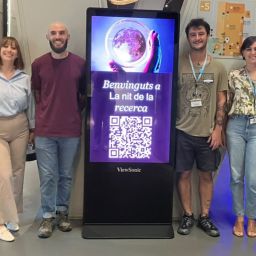
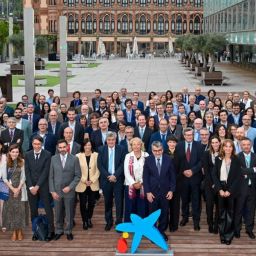
The CosmoCaixa Science Museum hosted the awards ceremony, attended by several representatives from the “la Caixa” Foundation, such as the Deputy General Director of Research and Grants, Àngel Font, and the Deputy General Director, Esther Planas. Also present at the ceremony were María José Arregui, President of the Luzón Foundation, and Esther Latres, Vice President of Research at Breakthrough T1D, as well as the researchers leading the projects.
In the words of Àngel Font, “biomedical research is one of the most powerful ways to improve people’s lives. The 34 awarded projects address a wide variety of challenges from different perspectives, but all share three fundamental axes to move toward a more hopeful future for patients and their families: collaboration, talent, and innovation”.
The call, which this year allocates 26 million euros to biomedical excellence research, grants up to 500,000 euros to projects involving a single research institution and up to one million euros to research consortia formed by multiple institutions. In this edition, consortium projects involve research groups from seven countries.
Since the program started in 2018, the total funding for the Health Research call from the “la Caixa” Foundation has been 172.3 million euros for 234 projects, of which 162 are led by Spanish teams, and 72 by research groups from Portugal. This is currently one of the leading biomedical and health research calls in the Iberian Peninsula.