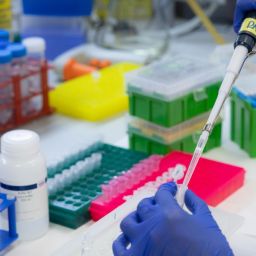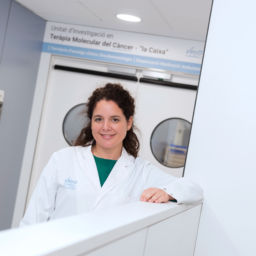


- Co-led by Rodrigo Toledo and Elena Garralda, IMMUNOMICS-VHIO is a platform for the discovery and validation of liquid biopsy biomarkers of immunotherapy outcomes.
- Published today in Clinical Cancer Research, results from this project’s first study show that ultrasensitive circulating tumor DNA analysis can predict immunotherapy response in patients with advanced cancer across diverse tumor types and could potentially optimize patient management and therapeutic decision-making.
- IMMUNOMICS-VHIO is part of one of VHIO’s institutional programs, the BBVA Foundation Comprehensive Program of Cancer Immunotherapy and Immunology (CAIMI), funded by the Fundación BBVA.
Published today in Clinical Cancer Research, findings from a study led by investigators at the Vall d’Hebron Institute of Oncology (VHIO), which forms part of the Vall d’Hebron Campus, underscore the efficacy of analyzing circulating tumor DNA (ctDNA) using a highly sensitive liquid biopsy platform for evaluating early response, predicting survival and tumor progression in patients with advanced cancers who received treatment with immunotherapy in the context of phase 1 clinical trials.
These are the first results from IMMUNOMICS-VHIO, a project-platform for the discovery and validation of liquid biopsy biomarkers of response to immunotherapy. IMMUNOMICS-VHIO has been developed as part of the BBVA Foundation Comprehensive Program of Cancer Immunotherapy and Immunology (CAIMI), funded by the Fundación BBVA. Rodrigo Toledo’s laboratory is also supported by the Fundación FERO, and this present work counted on the collaboration of the PREDICT project (Personalized REsponse Imaging biomarker for Cancer immunotherapy).
This work has also been conducted as part of the EU-funded Cancer Core Europe Building Data Rich Clinical Trials (CCE-DART) project, and the UpSMART Accelerator Consortium which is co-funded by the Asociación Española Contra el Cáncer (AECC).
The need for robust biomarkers in cancer immunotherapy
Immunotherapy has transformed cancer treatment by leveraging the patient’s own immune system to recognize and eliminate tumor cells. The approval of the first immune checkpoint inhibitor (ICI) in 2011 for metastatic melanoma marked a paradigm shift in cancer therapy, leading to the subsequent development of various antibodies targeting key immune checkpoints.
“Despite these advances, overall response rates to immune checkpoint inhibitors remains modest, typically ranging from 10 % to 20 %,” observed Elena Garralda, Director of VHIO’s Research Unit for Molecular Therapy of Cancer (UITM) – CaixaResearch, and co-corresponding author of this present study. “This spotlights the urgent need to identify robust, predictive biomarkers of immunotherapy response to optimize personalized treatment and maximize patient benefits.”
Ultrasensitive ctDNA monitoring
The detection of tumor-derived DNA fragments in blood (ctDNA) by liquid biopsy has emerged as a minimally invasive technique to help predict patients’ response to immunotherapy and potentially optimize treatment selection. Analyzing ctDNA before treatment, and serially throughout the course of the disease, allows for the identification of genetic changes occurring in a tumor and enables a better understanding of its evolution.
“In our laboratory we use different approaches to sequence, capture, and monitor the evolution of tumors in cancer patients undergoing immunotherapy,” said Rodrigo Toledo, co-corresponding author, Head of VHIO’s Biomarkers and Clonal Dynamics Group, and Coordinator of the CIBERONC (Spanish Biomedical Research Centre in Cancer) network’s Liquid Biopsy and Biomarker Working Module.
“With this work, we have evaluated the utility of next-generation ultrasensitive liquid biopsy and characterized specific patterns of ctDNA that correlate with response or resistance to therapy.”
The investigators analyzed 1,455 longitudinal plasma ctDNA samples serialized over time from a primary/retrospective cohort of 136 patients with refractory metastatic solid tumors across 24 cancer types, who received 1 to 3 successive lines of immunotherapy in the context of phase 1 clinical trials, followed by an independent prospective validation cohort of 66 patients (374 samples).
A promising biomarker for predicting and monitoring response to immunotherapy
Lower levels of ctDNA at baseline associated with higher progression-free survival and overall survival. At three weeks after initiating treatment, changes in ctDNA levels correlated with improved survival and disease control, and complete clearance of ctDNA from blood at any time strongly associated with radiological response and prolonged survival. Additionally, ctDNA dynamics distinguished true progression from pseudoprogression and predicted outcomes in patients receiving continued immunotherapy beyond initial progression.
“In conclusion,” added Rodrigo Toledo, “our comprehensive analysis of ultrasensitive ctDNA in patients with advanced cancers undergoing treatment with immunotherapy has demonstrated notable utility for early patient stratification, treatment response monitoring, and detection of disease progression. In addition to the ongoing IMMUNOMICS-VHIO project, our laboratory continues to develop new liquid biopsy techniques that can complement, or even reduce, the use of traditional imaging techniques for monitoring therapeutic responses.”
Moving forward, the investigators will validate the utility of data generated by ultrasensitive liquid biopsy in predicting whether the treatment under study will likely yield clinical benefits for the patient, prior to performing imaging response assessment according to established evaluation criteria in phase one clinical trials.
“Anticipating response to therapy is key to optimizing patient management and therapeutic decision-making. It also enables us to more rapidly assess whether it is advisable for the patient to continue participating in the clinical trial or, if not, whether we should propose a new therapeutic strategy,” concluded Garralda.
###
Reference
Elena Garralda* , Charles Abbott, Alma Calahorro, Oriol Mirallas, Jason Pugh, Ana Belen Moreno, Kathleen Keough, Vladimir Galvao, Guzman Alonso, Armando Mel Olano, Maria Vieito Villar, Arjun Oberoi, Julia Lostes Bardaji, Alberto Hernando-Calvo, Irene Braña, Giulia Pretelli, Belen Ortega, Carlota Arenillas, Natalia Czerniak, Fábio C. P. Navarro, Bailiang Li, Rachel Marty Pyke, Neeraja Ravi, Christina Zatse, Francesco Grussu, Marta Sanz, Cristina Vilaplana, Kira Raskina, Jose Jimenez, Roberta Fasani, Patricia Casbas-Hernandez, Ezoglin Oflazoglu, Darren Hodgson, Jorge Reis-Filho, Enriqueta Felip, Elena Elez, Eva Muñoz, Rodrigo Dienstmann, Josep Tabernero, Raquel Lopez-Perez, Paolo Nuciforo, Richard O. Chen&, Sean M. Boyle&, Rodrigo A. Toledo*. Broad utility of ultrasensitive analysis of circulating tumor DNA (ctDNA) 2 dynamics across solid tumors treated with immunotherapy. Clin Cancer Res OF1–OF17.https://doi.org/10.1158/1078-0432.CCR-25-231
*Corresponding authors.