
- Safety and efficacy data from a phase 1 multicenter study evaluating rapcabtagene autoleucel, an investigational next-generation CD19-directed CAR-T cell therapy that is manufactured in 48 hours using the T-Charge™ platform, show a manageable safety profile and antitumor activity.
- The best overall response, defined as complete remission or complete remission with incomplete recovery of blood count, was between 70 and 100% depending on the dose.
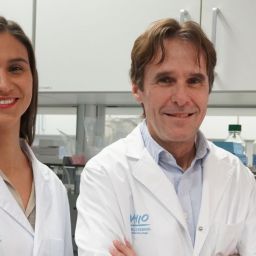
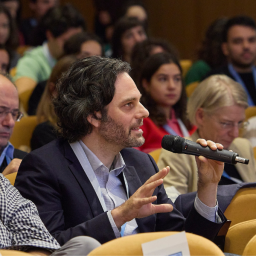
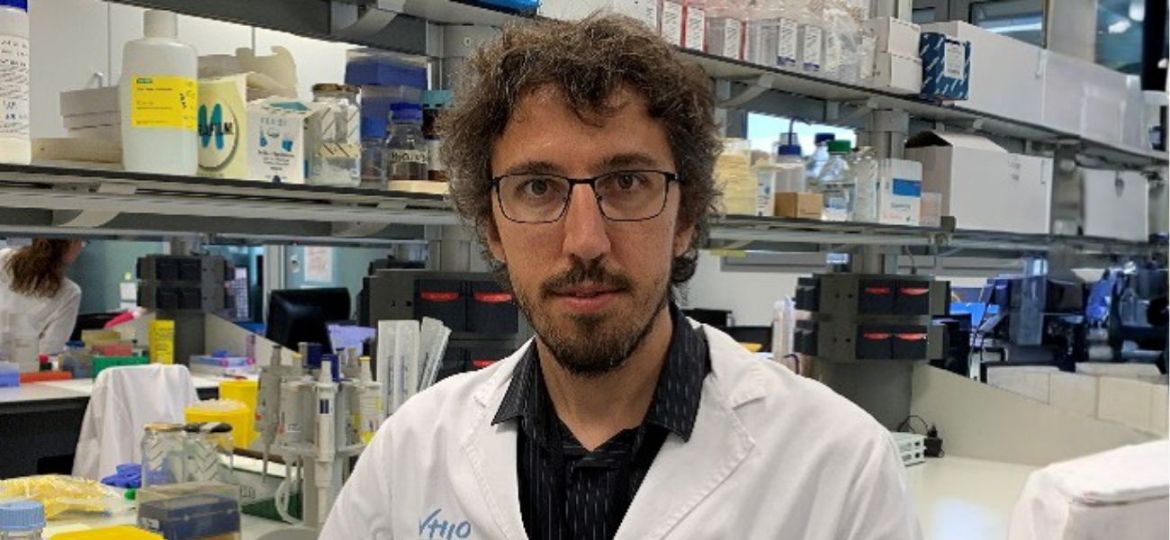
- Results from this study were presented today by Pere Barba, Head of Advanced Therapies at the Vall d’Hebron University Hospital’s Hematology Department and Hematologist and Lead Investigator of VHIO’s Experimental Hematology Group, at the 67th American Society of Hematology Annual Meeting (ASH 2025), December 6-9 in Orlando, Florida.
CAR-T – chimeric antigen receptor T-cell – therapy is a type of immunotherapy specifically developed for each individual patient and involves genetically reprogramming the patient’s own immune system cells to express specific chimeric antigen receptors (CAR) on the cell surface, which are then reinfused to the patient to target and attack tumor cells.
“CD19-directed T-cell therapies have produced unprecedented therapeutic responses in several B-cell malignancies. However, traditional CAR-T cell manufacturing requires a lengthy culturing process including ex-vivo T-cell expansion, leading to a door-to-door turnaround time of around twenty to twenty-five days. For patients with particularly aggressive tumors this is simply too long to wait,” said Pere Barba, Head of Advanced Therapies at the Vall d’Hebron University Hospital’s Hematology Department and Hematologist and Lead Investigator of VHIO’s Experimental Hematology Group, and first author of this present study, results of which he presented today at the 67th American Society of Hematology Annual Meeting (ASH 2025).
Another limitation is that the process of rapidly amplifying the CAR-T cell population requires them to divide a lot and very quickly. By the time these cells reach the patient they are therefore exhausted, which can compromise their efficacy.
CAR-Ts in 48 hours
“The T-Charge™ next generation platform does not require the expansion phase and thus reduces the CAR-T cell manufacturing time to under two days. In addition, since the CAR-T cells are not exposed to cytokines for so long, they are less exhausted and more effective,” added Barba.
Acute Lymphoblastic Leukemia
Acute lymphoblastic leukemia (ALL) is a fast-growing cancer of the bone marrow and blood. It is the most common childhood cancer, but it also affects adults. While first-line treatment achieves a cure rate of between 50 to 60% in adult patients, those who relapse have a very poor prognosis. There is therefore an unmet clinical need to investigate and develop more effective therapies for this patient population.
Phase 1 study in adult patients with relapsed or refractory B-cell ALL
A phase 1 multicenter study was designed to evaluate the safety and efficacy of rapcabtagene autoleucel, an innovative CD 19-directed CAR-T Cell therapy that is rapidly manufactured using the T-Charge™ platform, in 41 previously treated patients with relapsed or refractory B-ALL who received single-infusion rapcabtagene autoleucel at targeted dose level. The treatment showed a manageable safety profile and promising antitumor activity.
The best overall response of complete remission (CR) or complete remission with incomplete recovery of blood count at three months, meaning that the disease had completely disappeared or the disease had disappeared but abnormal levels of blood cells were still detected, was 70% in patients who received the lowest dose (DL1), 100% with second lowest dose (DL2), 92% with the third (DL3), and 83.3% in patients who received the highest dose (DL4).
The median duration of response (DOR) was 5.3 months for DL1 and 10.8 months for DL2, and not reached for DL3 or DL4.
“Results from this study demonstrate that CAR-T therapy with rapcabtagene autoleucel showed an acceptable balance of safety, efficacy, and cellular expansion. Also considering the reduced production time using the T-Charge™ platform, our findings support further investigations evaluating this therapy and translating this approach into routine clinical practice,” concluded Pere Barba.
The VHIO’s Experimental Hematology Group is also presenting today at ASH 2025 a study on infectious complications in patients with relapsed or refractory large B-cell lymphoma treated with CAR-T therapy or bispecific antibodies.
Dr. Adaia Albasanz, Infectious Diseases specialist at Vall d’Hebron University Hospital, together with Dr. Gloria Iacoboni, hematologist and researcher in VHIO’s Experimental Hematology Group, present the results of a study comparing the cumulative incidence of infections in patients with relapsed or refractory large B-cell lymphoma: 141 CAR-T recipients and 116 treated with bispecific antibodies, with a median follow-up of 37 months.
A total of 61.7% of CAR-T–treated patients and 57% of those receiving bispecific antibodies experienced at least one infection during the study period. The cumulative incidence of infections of any grade and of severe infections was high and similar between the two treatment groups. Most infections were bacterial or viral, while fungal infections were very rare. Infection-related mortality was low (5%) and comparable in both cohorts.
CAR-T–treated patients showed neurotoxicity more frequently and had greater exposure to corticosteroids for managing adverse events compared with patients treated with bispecific antibodies. Corticosteroid use was associated with an increased risk of infection in both treatment groups.
“In summary,” they conclude, “the risk of infection is high and similar across both treatment modalities, underscoring the need for more intensive preventive strategies in these high-risk patients.”
###
Sessions details
67th American Society of Hematology Annual Meeting (ASH 2025).
Session type: Oral Abstract Session.
- Cellular Immunotherapies: Early Phase Clinical Trials and Toxicities: Emerging CAR-T Cell Therapies for Acute Leukemias and Autoimmune Diseases.
Room: OCCC – Valencia Room W415D.
Session date and time: Monday, December 8, 10:30 AM – 12:00 PM EST
Authors: Pere Barba, MD, PhD, Alessandro Rambaldi, MD, Nicolas Boissel, MD, PhD, Noriko Doki, MD, PhD, Didier Blaise, MD, Fabio Ciceri, MD, Javier Briones Meijide, MD, PhD, Mi Kwon, MD, PhD, Shaun Fleming, MBBS (Hons), PhD, FRACP, FRCPA9, Cristina Blázquez Goñi, MD, Teshima Takanori, MD, PhD, Koji Kato, MD, PhD, Marie Balsat, MD, Ulrich Jäger, MD, Leyla Shune, MD, Pedro Marques Ramos, PhD, David Pearson, PhD, James Corcoran, PhD, Aiesha Zia, MSc, Matthew Foster, MD, Aisha Masood, MD, Michael J. Dickinson, MBBS, DMedSc, FRACP, FRCPA
Speaker: Pere Barba.
Presentation time: December 8, 10:30 AM – 10:45 AM EST.
Session type: Oral Abstract Session
- Aggressive Lymphomas: Epidemiological Excluding Prospective Clinical Trials: Real-world data to assess CAR outcomes and frailty
Room: OCCC – Tangerine Ballroom F3-4
Sssion date and time: Monday, December 8, 10:45 AM – 11:00 AM EST
Authors: Adaia Albasanz Puig, Víctor Navarro Garcés, Carolina Martínez Gómez, Álvaro Bienert García, Alma Queralt Rodrigo, Diego Clavo Martín, Anna Falcó Roget, Cecilia Carpio, Cristina García Herce, Ángel Serna, Carla Alonso Martínez, Mario Sánchez-Salinas, Samantha Feijoo, Corrado Benevolo Savelli, Cristina Viaplana, Anna Aguilera Romero, Itziar Carro, Miguel Ángel Canales Albendea, Ana Jiménez Ubieto, Alberto Mussetti, Francesc Bosch Albareda, Alejandro Martín García-Sancho, Pau Abrisqueta, Pere Barba i Gloria Iacoboni.
Speaker: Adaia Albasanz Puig