

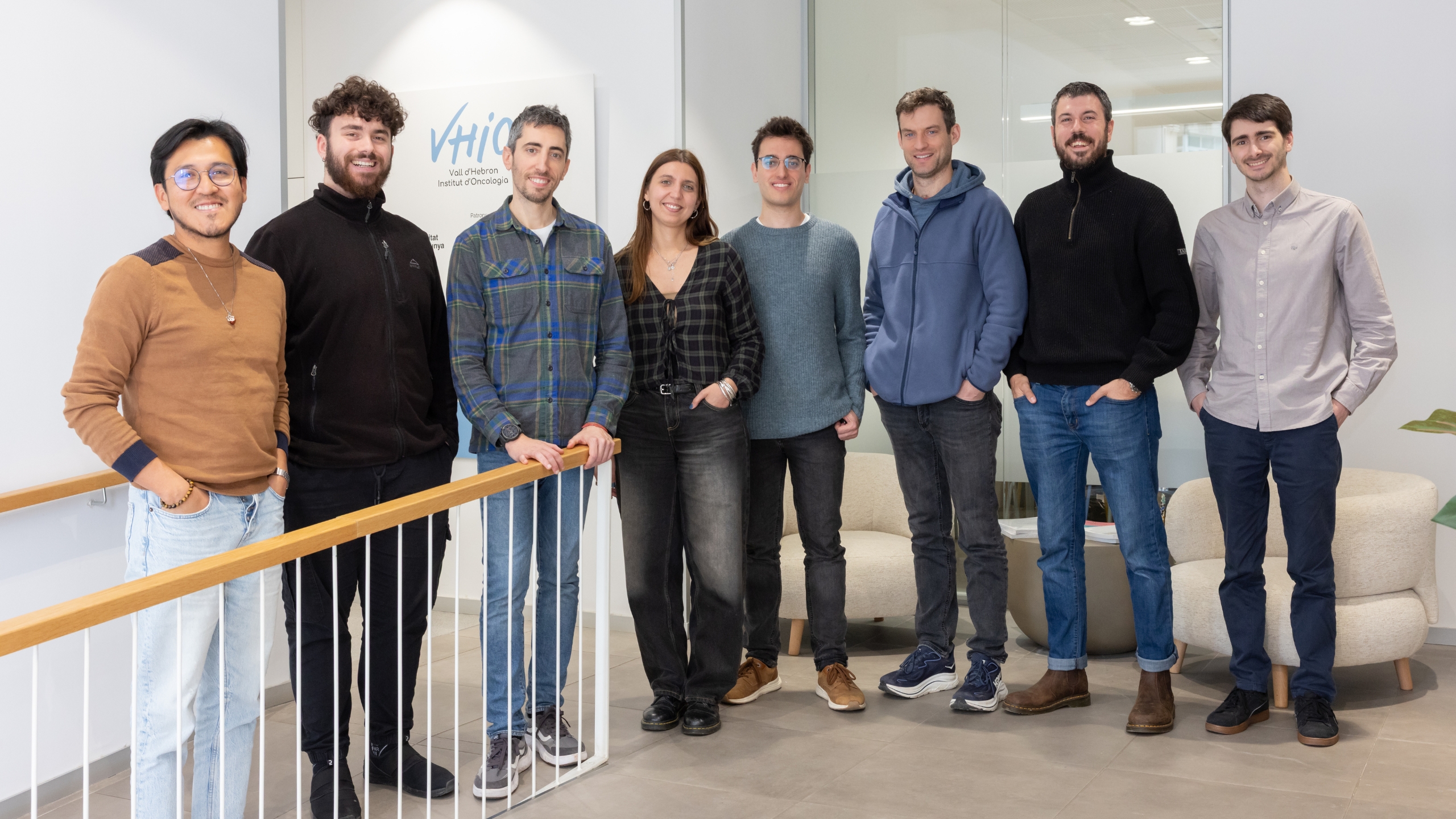
Our group focuses on advancing insights into the genomic basis of tumorigenesis and its interplay with the immune system. We perform large-scale tumor genomic analyses matched with a comprehensive profiling of the tumor immune microenvironment to better understand the tumor-immune crosstalk. Our final goal is to leverage this knowledge to improve the clinical development of tailored immunotherapies.
Given the emerging role of immune escape mechanisms in driving tumor development and metastasis, and the recognition that genomic alterations alone are not sufficient to explain cancer initiation and progression (Martínez-Jiménez et al. 2020, Martínez-Jiménez et al. 2023), the Cancer Immunogenomics Group is interested in developing computational models to 1) further the understanding of the interplay between tumor evolution and the immune system, and 2) harness this knowledge to improve the clinical development of tailored immunotherapies.
Our approach is based on integrating the genomic portrait of tumors (based on whole-exome/genome sequencing), which includes the identification of simple and complex tumor specific alterations, rationalized prioritization of tumor neoantigens, and characterization of tumor HLA-I status and other immune escape alterations; combined with a quantitative portrayal of the tumor immune microenvironment (using bulk transcriptomics/proteomics immune deconvolution, single cell and geospatial immune profiling, and TCR-sequencing). As an example, we have recently performed a large-scale analysis of the prevalence and impact of genetic immune escape alterations across >6,000 primary and metastatic tumors (Martinez-Jiménez, Priestley et al. 2023).
Thanks to our close collaboration with the Hartwig Medical Foundation we have access to one of the largest resources of whole genome sequenced tumors and full tumor transcriptomes (currently >7,000 patients, https://database.hartwigmedicalfoundation.nl/). Moreover, in-house data is generated to support the validation of our analyses and address specific questions that require more targeted analysis.


- Characterize T-lymphocyte clonal hematopoiesis mutations in T-lymphocyte and assess their influence in anti-cancer immunity.
- Study the immune-oncogenicity trade-off of cancer mutations.
- Understand the distinctive genomic and transcriptomic traits of cancer of unknown primary (CUP).
- Understand the transcriptional reprograming of metastatic tumors and the interplay with the genomic background
- Co-lead cancer genomics projects in collaboration with the Hartwig Medical Foundation to identify new clinical biomarkers for non-responders to cancer therapies and demonstrate the clinical added value of WGS as part of routine care.
- Usset J, de Ligt J, Roerink S, Roepman P, Cuppen E, Martínez-Jiménez F. Systematic identification of genomic non-response biomarkers to cancer therapies. bioRxiv [Preprint].2025.10.06.680777.
- Martínez-Jiménez F*, Chowell D*. Genetic immune escape in cancer: timing and implications for treatment. Trends in Cancer. doi: 10.1016/j.trecan.2024.11.002 Genetic immune escape in cancer: timing and implications for treatment. Trends Cancer. 2024 Dec 3:S2405-8033(24)00254-1. doi: 10.1016/j.trecan.2024.11.002. Epub ahead of print.
- Usset J, Rosendahl Huber A, Andrianova MA, Batlle E, Carles J, Cuppen E, Elez E, Felip E, Gómez-Rey M, Lo Giacco D, Martinez-Jimenez F, Muñoz-Couselo E, Siu LL, Tabernero J, Vivancos A, Muiños F, Gonzalez-Perez A, Lopez-Bigas N. Five latent factors underlie response to immunotherapy. Nat Genet. 2024 Oct;56(10):2112-2120. doi: 10.1038/s41588-024-01899-0. Epub 2024 Sep 12.
- Marcos-Villar L, Perdiguero B, Anthiya S, Borrajo ML, Lou G, Franceschini L, Esteban I, Sánchez-Cordón PJ, Zamora C, Sorzano CÓS, Jordá L, Codó L, Gelpí JL, Sisteré-Oró M, Meyerhans A, Thielemans K, Martínez-Jiménez F, López-Bigas N, García F, Alonso MJ, Plana M, Esteban M, Gómez CE. Modulating the immune response to SARS-CoV-2 by different nanocarriers delivering an mRNA expressing trimeric RBD of the spike protein: COVARNA Consortium. NPJ Vaccines. 2024 Mar 6;9(1):53. doi: 10.1038/s41541-024-00838-8.
- Krishna, C., Tervi, A., Saffern, M., Wilson, E. A., Yoo, S. K., Mars, N., Roudko, V., Cho, B. A., Jones, S. E., Vaninov, N., Selvan, M. E., Gümüş, Z. H., FinnGen§, Lenz, T. L., Merad, M., Boffetta, P., Martínez-Jiménez, F., Ollila, H. M., Samstein, R. M., & Chowell, D. (2024). An immunogenetic basis for lung cancer risk. Science. 2024 Feb 23;383(6685):eadi3808. doi: https://doi.org/10.1126/science.adi3808
- Usset J, de Ligt J, Roerink S, Roepman P, Cuppen E, Martínez-Jiménez F. Systematic identification of genomic non-response biomarkers to cancer therapies. bioRxiv [Preprint].2025.10.06.680777.
- Gumpert N, Sagie S, Arnedo-Pac C, Babu T, Weller C, Gonzalez-Perez A, Wang Y, Michel Todó L, Levy R, Chen X, Greenberg P, Dayan-Rubinov M, Yakubovich E, Wasserman-Bartov T, Zerbib M, Gong J, Rebernick RJ, Oliveira Tercero A, Agundez Muriel L, Benedek G, Kedmi M, Oren R, Ben-Dor S, Levin Y, Troyanskaya OG, Munzur AD, Wyatt AW, Cieslik MP, Quigley DA, Van Allen EM, Anandasabapathy N, Mateo J, Yang X, Martínez-Jiménez F, Lopez-Bigas N, Samuels Y. Recurrent immunogenic neoantigens and their cognate T-cell receptors in treatment-resistant metastatic prostate cancer. Cancer Discov. 2025. doi: 10.1158/2159-8290.CD-24-1213.
- Garrido G, Scrofani J, Arsenijevic A, Aranguren A, Martínez-Jiménez F, Borràs E, Sabidó E, Vernos I. Centrosome clustering in cancer cells requires microtubule assembly through a RanGTP-dependent TPX2-KIFC1 interaction. Curr Biol. 2025. doi: 10.1016/j.cub.2025.11.075.
- Project: Early clinical development of first-in-class EGL-001 targeting Tregs in head and neck squamous cell carcinoma, supported by AI-based pathomics – NEOTREG. Reference Number: 101290046. Funded by: European Commission. Execution Period: 01/06/2026-31/05/2031. VHIO Co-Leads: Irene Braña & Fran Martínez
- Project: Unveiling the Role of T-Lymphocyte Clonal Hematopoiesis in Antitumor Immunity to Transform Cancer Immunotherapy – tl-Chancer. Reference Number: 101229642. Funded by: European Research Council (ERC). European Commission. Execution Period: 01/06/2026-31/05/2031. PI: Fran Martínez
- Pan-cancer analysis of cancer-cell intrinsic HLA-II expression and its impact in the genomic landscape and in the tumor microenvironment (HLA-II-INSIGHT). Funded by: Agencia Estatal de Investigación – Ministerio de Ciencia e Innovación. Reference: PID2024-155588OA-I00. Execution Period: 01/09/2025 – 31/08/2028. PI: Francisco Martínez

- Project: Systematic characterization of distinctive immunogenomic traits of Cancers of Unknown Primary (CUPs) to identify novel therapeutic opportunities. Referencia: Lab AECC 2024. LABAE246817MART. Asociación Española Contra el Cáncer. Periodo concesión: 11/2024-11/2027. Role: Principal Investigator
- Project: Small cell lung cancer: from biology networks to tailored therapy (July 2024-2029). Spanish Association for Cancer Research (AECC). AECC 70 Survivorship 2024 Challenge. Referencia: AECC 70 Survivorship 2024 Challenge. Asociación Española Contra el Cáncer. Periodo concesión: 07/2024-07/2029. Role: Work-package leader
- Project: Computational immunogenomics. Referencia: Ramon y Cajal program. SRYC2200I037005XV0. Ministerio de Ciencia e Innovacion. Periodo concesión: 01/2024-01/2028. Role: Principal Investigator
- Project: Characterization of the impact of genetic immune escape alterations on responses to Immune Checkpoint Inhibitors across human cancers. XXIV. Referencia: XXIV Beca FERO, Fundación FERO. Periodo concesión: 10/2023-10/2025. Role: Principal investigator.