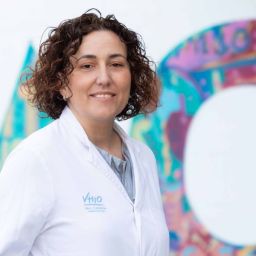


At the recent European Society for Medical Oncology (ESMO) 2025 Congress held in Berlin, Dr. Marta Perachino, a researcher in VHIO’s Breast Cancer Group, received a grant from the Gilead Sciences Research Scholars Program in Solid Tumors. This grant will support her research on the genomic and epigenomic characterization of healthy breast tissue and its relationship with cancer development.
Dr. Perachino, who is currently pursuing her PhD at the Autonomous University of Barcelona under the supervision of Dr. Cristina Saura and Prof. Matteo Lambertini, expressed her gratitude:
“I am deeply thankful to Gilead for their support. It is remarkable to see the company’s commitment to promoting independent scientific projects, beyond the direct development of medicines.”
Gilead Research Scholars Program
The Gilead Sciences Research Scholars Program aims to support innovative research by emerging investigators worldwide, incorporating new perspectives into the pursuit of scientific understanding and progress. Each program is overseen by a scientific review committee of experts in their respective fields, independent of Gilead, to ensure fair and objective evaluation of all applicants and their projects.
INSP3KTION Project
The $180,000 grant —awarded for the first time to a Spanish project— will fund the INSP3KTION study, which seeks to better understand biological changes in healthy breast tissue and their relationship with breast cancer development.
“This project aims to more precisely interpret data from deep analyses of these samples to implement the findings in future clinical trials, potentially capable of transforming clinical practice,” explains Dr. Perachino.
In 2023, a study led by Dr. Cristina Saura, Head of the Breast Cancer Unit at Vall d’Hebron University Hospital and VHIO’s Breast Cancer Group, together with Dr. Ana Vivancos, Head of VHIO’s Cancer Genomics Group, demonstrated for the first time that breast milk from breast cancer patients contains tumor DNA, known as circulating tumor DNA (ctDNA).
This ctDNA can be detected through liquid biopsy of breast milk and could become a novel tool for early breast cancer diagnosis in the postpartum period.
Analysis of this circulating DNA in breast milk has revealed activating mutations in the PIK3CA gene in samples from healthy women, without any malignant lesions observed so far, with a follow-up period currently limited to 24 months.
Understanding the Biology of Breast Tissue Changes
Building on these findings, the INSP3KTION project aims to investigate the prevalence of PIK3CA and other 124 breast cancer–related gene mutations in both healthy and benign breast tissues, complementing the breast milk research.
Dr. Perachino adds:
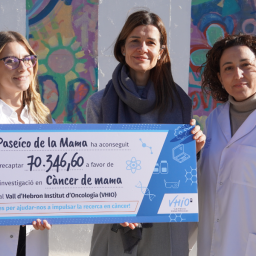
“The preliminary version of this study has already obtained funding from the Associazione Italiana per la Ricerca sul Cancro (AIRC) through a competitive fellowship supporting my work in 2025, as well as financial support from Paseico de la Mama to cover consumable costs. The Gilead Research Scholars Program grant will enable us to expand the study cohort and integrate advanced translational analyses (NGS and methylation profiling).”
The goal of this analysis is to identify mutations associated with breast cancer and to gain deeper insight into the biological processes linked to physiological changes occurring during breast tissue maturation.
“The results of this study will be crucial to understanding the molecular changes that may contribute to the development of benign and malignant breast lesions, and, in the future, to properly interpret molecular alterations present in breast milk —aiming to achieve sufficient sensitivity in our liquid biopsy panel to enable its use as a screening tool for postpartum breast cancer in high-risk women,” concludes Dr. Perachino.
Finally, it is worth highlighting that the INSP3KTION project’s focus on healthy participants holds great potential, as it will generate fundamental knowledge that could significantly advance prevention, early diagnosis, and understanding of the mechanisms driving breast cancer development.