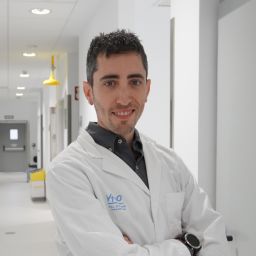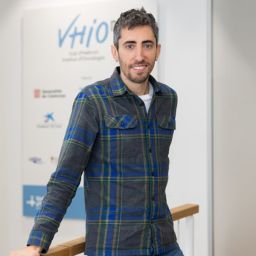

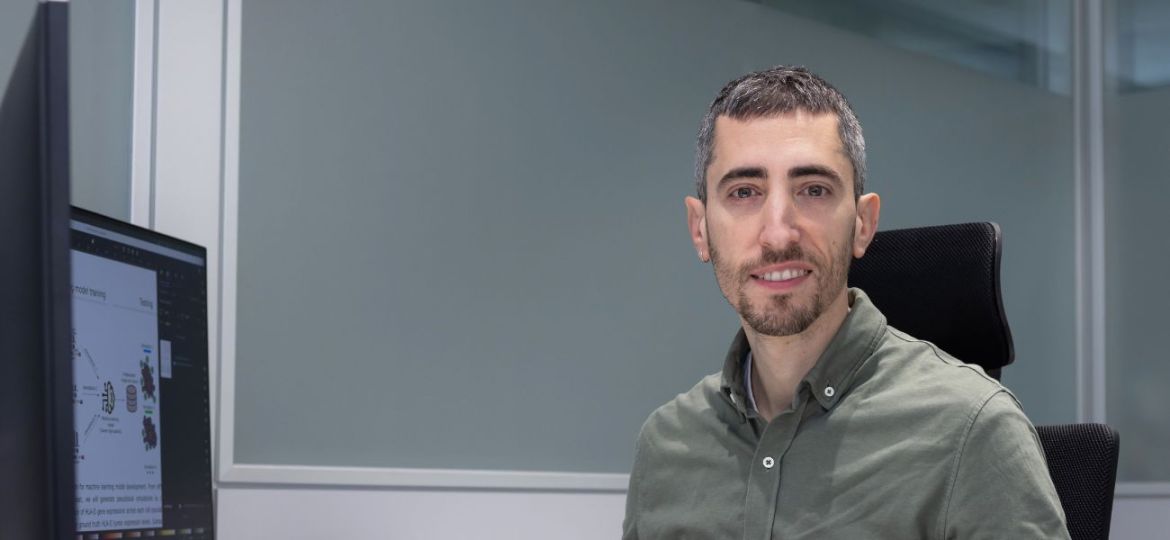
Dr. Francisco Martínez-Jiménez, Head of the Computational Immunogenomics Group at VHIO, has been awarded a Consolidator Grant from the European Research Council (ERC) to fund the tL-CHANCER project.
This project, endowed with €2,000,000 over five years, will enable an in-depth investigation of the role of T-cell clonal hematopoiesis in antitumor immunity, with the goal of transforming cancer immunotherapy and opening new therapeutic avenues.
Despite recent advances, the effectiveness of immunotherapies for treating solid tumors remains limited. T cells, essential for adaptive immunity, are key players in immunotherapy. Yet, despite their importance, we still do not fully understand their ability to infiltrate solid tumors and mount robust immune responses, both in treatment-naïve patients and in those previously treated. This knowledge gap remains a significant challenge for improving cancer immunotherapy and determining which patients will benefit from these treatments.
What is T-cell clonal hematopoiesis?
T-cell clonal hematopoiesis (tL-CH) is a phenomenon in which some bone marrow stem cells that produce T cells acquire a mutation that gives them an advantage over other T cells, leading them to generate a “clone” of T cells that expands more than the rest.
The central hypothesis of the tL-CHANCER project is that certain mutations associated with T-cell clonal hematopoiesis enhance antitumor activity and could therefore pave the way for the development of more effective cancer immunotherapies. The first objective of the study is the systematic analysis and characterization of these mutations—for the first time—in both cancer patients and healthy donors. “Through the systematic study of these T-cell populations in cancer patients, we aim to uncover the impact of these mutations on the antitumor function of T cells,” explains Dr. Francisco Martínez Jiménez.
New immunotherapy strategies
Even more importantly, some of these mutations can be modelled using genome-editing tools to identify those that enhance the antitumor activity of cancer immunotherapies, uncovering new mechanisms to improve T-cell-based immunotherapies. “By studying processes that occur naturally in our bodies, we can identify new opportunities to optimize cancer immunotherapy,” says Dr. Martínez.
To achieve this, Dr. Martínez’s team will combine large-scale genomics, advanced computational analytics, and cutting-edge genome-editing technologies. This will make it possible to move from identifying and analyzing these mutations in real cancer patients to modelling them in mouse models, allowing researchers to understand their functional impact on antitumor immunity.
“The study of the mutations in these T-cell populations and their response to tumor-derived signals will broaden our understanding of cancer evolution and open up new avenues for developing therapeutic strategies that leverage these alterations to enhance existing immunotherapies,” concludes Dr. Martínez.
The ERC selects 349 mid-career researchers for €728 million in Consolidator Grants
The European Research Council (ERC) has selected 349 mid-career researchers to receive this year’s Consolidator Grants. With funding from the EU’s Horizon Europe programme, these grants will support cutting-edge research at universities and research centres in 25 EU Member States and associated countries.
Ekaterina Zaharieva, European Commissioner for Startups, Research and Innovation, said: ‘Congratulations to all the researchers on winning the ERC grants. The record budget of 728 million euro invested to support these scientific projects shows the EU is serious about making the continent attractive for excellent researchers.’
President of the European Research Council, Prof. Maria Leptin, said: ‘To see all this talent with groundbreaking ideas, based in Europe, is truly inspiring. This bold research may well lead to new industries, improve lives and strengthen Europe’s global standing. This was one of the most competitive ERC calls ever, with record demand and also many excellent projects left unfunded. It is yet another reminder of how urgent the call for increased EU investment in frontier research has become.’
The selected researchers plan to conduct their research at universities and research centres in 25 countries, including the United Kingdom (66 grants), Germany (58 grants), the Netherlands (40 grants) and Spain (26 grants). They come from Europe and other parts of the world, representing 44 different nationalities. Some 38% of the researchers selected are women; a figure that has remained stable over the past few years. The ERC received 3,121 applications for this call, a 3% increase compared with the previous round.