

On June 8, the FERO Gala brought together researchers, physicians, companies, philanthropists, and representatives of civil society in Barcelona who are committed to advancing cancer research. During the ceremony, FERO Cancer awarded nearly €1 million in grants to seven outstanding research projects aimed at accelerating the development of new treatments, improving early diagnosis, and expanding therapeutic options for patients.
The award-winning researchers work at some of the country’s leading biomedical research centers and will address some of the most pressing challenges in oncology, ranging from the development of novel immunotherapies and precision cell therapies to the search for more effective treatments for pancreatic cancer—one of the deadliest tumor types—and improvements in early disease detection.
Through these grants, FERO Cancer reaffirms its commitment to translational research, a model designed to accelerate the transfer of scientific discoveries into clinical practice so that patients can benefit sooner from advances against cancer.
“Each of these fellowships represents an opportunity to bring science closer to patients. Our goal is to support innovative projects capable of transforming scientific knowledge into new diagnostic and therapeutic tools that improve the lives of people with cancer,” said Marta Cardona, General Director of FERO Cancer.
A VHIO Project to Improve CAR-T Therapies for Acute Leukemias
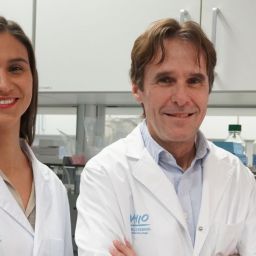
Dr. Pere Barba, Head of the Advanced Hematological Therapies Unit at Vall d’Hebron University Hospital and Head of VHIO’s Cellular Engineering and Hematological Immunotherapy Group, has been awarded the II FERO-Carmen Mateu Fellowship for Young Physician-Researchers, promoted by the FERO Foundation with the support of Perelada, to develop an innovative project aimed at improving the precision and efficacy of CAR-T therapies for acute leukemias.
The project, entitled “Logic AND-gating to overcome key challenges in CAR T cell therapy for acute leukemias,” seeks to address some of the major challenges that still limit the application of CAR-T therapies in certain hematological malignancies. To achieve this, the researcher will develop new cellular engineering strategies based on multi-recognition systems capable of identifying tumor cells more accurately while reducing the risk of damaging healthy tissues.
 CAR-T therapies have revolutionized the treatment of certain blood cancers by reprogramming immune cells to recognize and destroy tumor cells. However, one of the current challenges is increasing their specificity in order to broaden their applicability and improve their safety for a larger number of patients.
The project led by Dr. Barba will explore the use of biological logic systems that enable CAR-T cells to activate only under specific conditions. This approach could help improve the precision of these treatments and open new therapeutic opportunities for patients with acute leukemias.
“CAR-T therapies have transformed the treatment of certain hematological cancers, but important challenges remain. Our goal is to develop tools that allow these therapies to target tumor cells more precisely, improving both their efficacy and safety,” explained Dr. Pere Barba.
According to VHIO, this recognition highlights the potential of translational research to generate new therapeutic options for patients.
“The award of this fellowship recognizes highly innovative research in one of the most promising fields in oncology today. The work led by Dr. Pere Barba reflects VHIO’s commitment to promoting projects capable of transforming scientific knowledge into new solutions for patients with cancer,” said Dr. Josep Tabernero, Head of the Medical Oncology Department at Vall d’Hebron University Hospital and Director of VHIO.
The II FERO-Carmen Mateu Fellowship for Young Physician-Researchers is part of the FERO Foundation’s research funding program, designed to support the training of young medical oncologists in translational oncology research and to promote the rapid transfer of scientific advances to patients. Thanks to the support of organizations committed to biomedical research, such as Perelada, these grants contribute to driving scientific advances with the potential to impact clinical practice.
More information about FERO Fellowships