
Our group studies cancer heterogeneity at the genetic and cell state level. From a genetics perspective, we focus on understanding large-scale chromosomal changes known as copy number alterations (CNAs). We combine state-of-the-art genome engineering strategies to uncover the mechanisms by which CNAs enable cancer cells to disseminate and resist therapies.
We are particularly interested in the role of these alterations in immune surveillance, tumor heterogeneity, and cancer genome evolution. We also leverage our genome engineering expertise to devise novel strategies to image, trace, and dissect the function of complex cell states in cancer. We aim to understand how genetic and phenotypic heterogeneity drives cancer progression and therapy resistance. Our ultimate goal is to identify the underlying principles that govern cancer heterogeneity and use this knowledge to design new therapeutic strategies that control cancer and improve patient care.


- Understand the role of copy number alterations (CNAs) as mechanisms of immune evasion and epigenetic rewiring.
- Identify the effect of CNAs in tumor heterogeneity.
- Dissect the contribution of CNAs and ploidy in shaping cancer genome evolution.
- Decipher the biology of unique cell states via combinatorial genetics models in vivo.
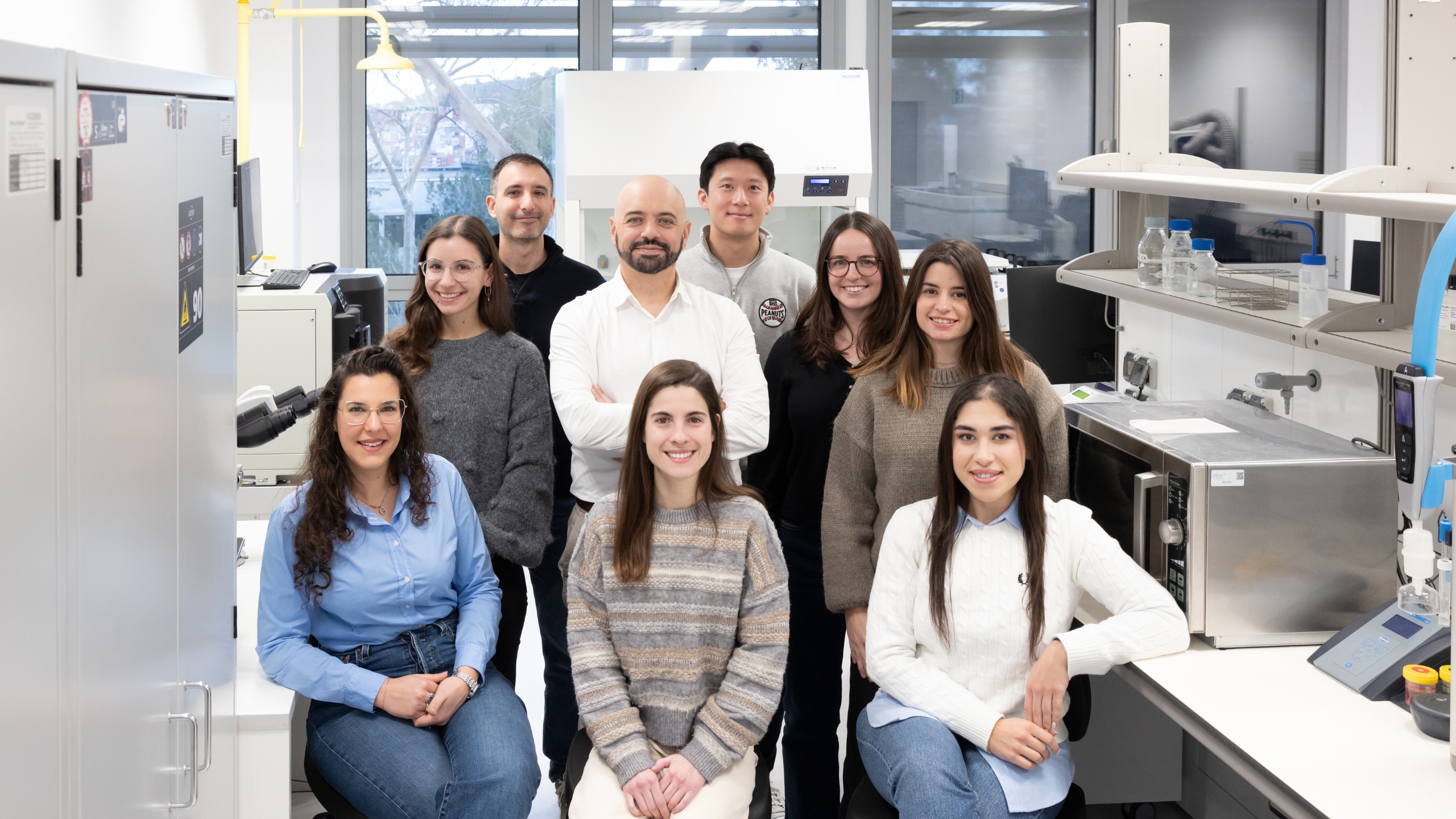
Group Leader
Francisco “Pancho” Barriga
Lab manager
Xieng Chen Wang
Bioinformatician
Gaia Grasso
Postdoctoral fellows
Etna Abad
Dario Ruiz
PhD students
Sofía Calpe
Golsa Jahangiri
Matea Katić
Claudia Yañez
- Chaves-Perez A, Millman SE, Janaki-Raman S, Ho YJ, Hinterleitner C, Barthet VJA, Morris JP 4th, Barriga FM, Reyes J, Kyaw A, Pasolli HA, Pe’er D, Thompson CB, Finley LWS, Cross JR, Lowe SW. Metabolic adaptations direct cell fate during tissue regeneration. Nature. 2025 Jul;643(8071):468-477. Erratum in: Nature. 2025 Jul;643(8072):E15.
- Duffié R, Shayya H, Escamilla Del Arenal M, Wang M, Kahiapo J, Ugurbil A, Keskin A, Clowney F, Bashkirova EV, Pourmorady AD, Schieren I, Avila HI, Berchowitz LE, Barriga FM, Batlle E, Jovanovic M, Lomvardas S. Mex3a-dependent post-transcriptional silencing ensures olfactory receptor diversity and axon guidance specificity. Cell Rep. 2025 Aug 26;44(8):115979.
- Zhao X, Liu B, William WN, Tsanov KM, Ho YJ, Barriga FM, Lim RJ, Trifas M, Khandekar A, Du Y, Lowe SW, Dubinett SM, Davoli T, Lippman SM. Interferon Epsilon Loss Is Elusive 9p21 Link to Immune-Cold Tumors, Resistant to Immune Checkpoint Therapy, and Endogenous CXCL9/10 Induction. J Thorac Oncol. 2025 Sep;20(9):1177-1236.
- Tsanov KM, Barriga FM, Ho YJ, Alonso-Curbelo D, Livshits G, Tian S, Koche RP, Baslan T, Simon J, Wuest AN, Reyes J, Park J, Luan W, Wilkinson JE, Bhanot U, Ray-Kirton J, Masilionis I, Dimitrova N, Iacobuzio-Donahue CA, Chaligné R, Pe’er D, Massagué J, Lowe SW. SMAD4 induces opposite effects on metastatic growth from pancreatic tumors depending on the organ of residence. Nat Cancer. 2025 Nov;6(11):1839-1856.
- Barriga FM*, Lowe SW. Barriga FM, Lowe SW. Engineering megabase-sized genomic deletions with MACHETE (Molecular Alteration of Chromosomes with Engineered Tandem Elements). Nat Protoc. 2024 May;19(5):1381-1399. *Corresponding author. “My Bibliography” at the NCBI
- Tsanov KM, Barriga FM, Ho YJ, Alonso-Curbelo D, Livshits G, Koche RP, Baslan T, Simon J, Tian S, Wuest AN, Luan W, Wilkinson JE, Masilionis I, Dimitrova N, Iacobuzio-Donahue CA, Chaligné R, Pe’er D, Massagué J, Lowe SW. Metastatic site influences driver gene function in pancreatic cancer. bioRxiv [Preprint]. 2024 Mar 18:2024.03.17.585402.
- Barriga FM. Studying large genomic deletions with MACHETE. Nat Rev Cancer. 2023 May;23(5):271.
- Reference: CNS2023-144041. Title: Unraveling the function of anti-tumor immune cell states through combinatorial genetics – IMMUNE_TRACE. Funding Entity: Agencia Estatal de Investigación. Ministerio de Ciencia e Innovación. VHIO Funding Period: 1/04/2024-31/03/2026. PI: Francisco Barriga. Ayuda cofinanciada por la Unión Europea Next Generation EU – Plan de Recuperación Transformación y Resilencia

- Reference: RYC2022-037389-I Title: Dissecting the function of copy number alterations in cancer. Funding Entity – Call: Agencia Estatal de Investigación – Ayuda Ramón y Cajal 2022 PI/Institution: Francisco Barriga, PhD / VHIO Funding Period: January 2024 – December 2028
- Reference: PID2022-141256OA-I00 (Acronym: EPI-MHC) Title: Dissecting the epigenetic effects of MHC cluster deletion in pancreas cancer Funding Entity – Call: Agencia Estatal de Investigación – Proyectos de Generación de Conocimiento 2022 PI/Institution: Francisco M. Barriga, PhD / VHIO Funding Period: September 2023 – August 2026
- Reference: CNS2023-144041 Title: Unravelling the function of anti-tumor immune cell states through combinatorial genetics Funding Entity – Call: Agencia Estatal de Investigación – Consolidación Investigadora 2023 PI/Institution: Francisco M. Barriga, PhD / VHIO Funding Period: April 2024 – March 2026
- Reference: Beca FERO Title: Dissecting the epigenetic and immune effects of MHC LOH in ovarian cancer. Funding Entity – Call: Fundación FERO – XXVI Beca FERO PI/Institution: Francisco M. Barriga, PhD / VHIO Funding Period: October 2024 – September 2026
- ERC Starting Grant Acronym: MACHETE. Reference: PID2022-141256OA-I00. Title: Dissecting the epigenetic effects of MHC cluster deletion in pancreas cancer (EPI-MHC). Funding Entity: Agencia Estatal de Investigación – Ministerio de Ciencia e Innovación. PI: Pancho Barriga. VHIO Funding period: 01/09/2023 – 31/08/2026.

Título: Unraveling the function of anti-tumor immune cell states through combinatorial genetics – IMMUNE_TRACE
Referencia: CNS2023-144041
Entidad Financiadora: Agencia Estatal de Investigación. Ministerio de Ciencia e Innovación
Periodo de Ejecución: 1/04/2024-31/03/2026
PI: Francisco Barriga
Ayuda cofinanciada por la Unión Europea Next Generation EU – Plan de Recuperación Transformación y Resilencia

ERC
Edward P Evans Foundation