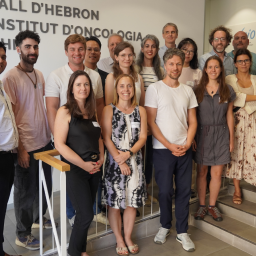


A group of 34 international leading experts in hepatology, data science, and artificial intelligence (AI) has released a consensus report presenting concrete recommendations for the clinical application of AI in hepatology. The recommendations are the result of a structured, multi-step, anonymized process led by Prof. Jakob N. Kather, Else Kröner Fresenius Center (EKFZ) for Digital Health, TU Dresden and University Hospital Dresden, together with Dr. Sabela Lens (University Hospital Barcelona/Spain) and Dr. Eric Trépo (University Hospital Brussels/Belgium). The paper was published by the European Association for the Study of the Liver (EASL) and its AI Task Force in the Journal of Hepatology.
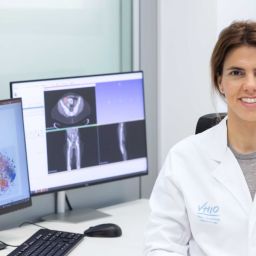
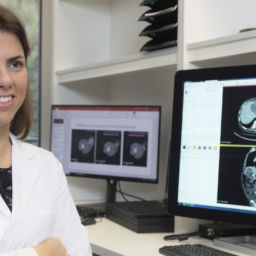
Among the co-authors of the report are Dr. Raquel Pérez López, a specialist in Radiology and Head of the Radiomics Group at VHIO, and predoctoral researcher María Balaguer-Montero, also from the same group. Their participation has been key in incorporating perspectives related to medical imaging, radiomics, and its practical application in the field of liver disease.
Progress and challenges in the use of AI
AI systems have rapidly evolved over the past 15 years, with major advances particularly in image-based applications in radiology and pathology – and more recently, also in language-based methods. Despite this progress, clinical use of AI remains limited due to numerous implementation challenges. To better understand these barriers and support the integration of AI tools into hepatology, the EASL AI Task Force conducted a structured consensus process involving expert hepatologists and data scientists, as well as clinical AI and regulatory sciences experts. They based it on the Delphi method – a systematic, iterative, anonymized survey procedure widely used in medicine to develop guidelines. It ensures that resulting recommendations reflect broad expert consensus. Dr. Jan Clusmann, first author of the publication and postdoctoral researcher in the “Clinical Artificial Intelligence” group led by Prof. Jakob N. Kather at the EKFZ for Digital Health at TU Dresden, coordinated the entire process and compiled the results.
“AI has the potential to transform the care and study of liver diseases. However, we are still facing significant implementation barriers. Our publication aims to provide clear guidance on how to overcome these and move toward routine clinical use of AI-based systems,” says Jakob N. Kather, Professor of Clinical Artificial Intelligence at the EKFZ for Digital Health, TU Dresden and physician at University Hospital Dresden.
“As a member of the EASL AI Task Force, our Radiomics Group at VHIO contributes our expertise in medical imaging and radiomics to drive the application of artificial intelligence in liver cancer. We help develop international standards and promote interdisciplinary collaboration to advance diagnosis, research, and the clinical integration of these technologies,” says Dr. Raquel Pérez López, member of the EASL AI Task Force and co-author of the study.
AI literacy as a key to implementation
A central recommendation of the group is to build AI literacy among healthcare professionals. The expert panel further advocates that AI systems must demonstrate efficacy, reliability, and trustworthiness before they can be adopted into clinical practice. Even validated tools often face practical barriers due to heterogenous infrastructure across healthcare systems and limited interoperability of hospital IT systems. Addressing these implementation challenges is crucial to enabling routine use.
Conducting AI-supported clinical trials and facilitating data exchange
The experts also highlight the importance of investigating AI methods in clinical trials. This requires seamless information exchange between institutions, decentralized access to de-identified data, and early collaboration between AI researchers and clinical trial investigators.
Promoting interdisciplinary collaboration and creating structured frameworks
Professional societies can help, for example by establishing targeted initiatives and structured frameworks to support AI implementation. Future clinical guidelines, coordinated by these societies, should explicitly discuss recommendations of AI models. Those guidelines should further serve as prioritized clinical context for AI-based decision support systems.
“The transition to a digital, AI-enabled healthcare system requires coordinated collaboration, robust validation, trust in new technologies and close exchange between healthcare professionals, researchers, system developers, legislators and policy makers. The recommendations presented are an excellent foundation that will facilitate the safe and responsible adoption of AI in medicine,” says Stephen Gilbert, Professor of Medical Device Regulatory Science at the EKFZ for Digital Health at TUD and co-author of the publication.
These recommendations aim to assist healthcare institutions, industry stakeholders, and policymakers in advancing the responsible, patient-centered use of AI in hepatology worldwide.
“What is unique about this publication is the international, interdisciplinary consensus – the result of close collaboration between experts from different countries and disciplines. This common basis can help us to translate pioneering AI technologies from the lab into clinical practice. We illustrate this roadmap for hepatology, but our goal was to develop a scalable blueprint also for other areas of medicine as they face similar challenges,” says Dr. Jan Clusmann, first author of the publication and postdoctoral researcher in Professor Kather’s team.
The position paper “The barriers for uptake of artificial intelligence in hepatology and how to overcome them,” is published in the Journal of Hepatology, the official journal of the European Association for the Study of the Liver (EASL).
Publication
Jan Clusmann, Maria Balaguer-Montero, Octavi Bassegoda, Carolin V. Schneider, Tobias Seraphin, Ellis Paintsil, Tom Luedde, Raquel Perez Lopez, Julien Calderaro, Stephen Gilbert, Thomas Marjot, Ashley Spann, Debbie L. Shawcross, Sabela Lens, Eric Trépo, Jakob Nikolas Kather: The barriers for uptake of artificial intelligence in hepatology and how to overcome them; Journal of Hepatology, July 2025. https://doi.org/10.1016/j.jhep.2025.07.003
About the EASL AI Task Force
The EASL AI Task Force is a group of experts established by the European Association for the Study of the Liver (EASL) to guide the responsible and effective use of artificial intelligence in hepatology. Their goal is to harness AI to improve research, education, clinical decision-making, and patient care related to liver diseases. They also advise on AI integration for EASL events and publications as well as fostering strategic partnerships to drive AI advancements relevant to liver diseases and supporting operational tasks at EASL. Further information and list of members:
https://easl.eu/easl/leadership-and-governance/ai-task-force/
Else Kröner Fresenius Center (EKFZ) for Digital Health
The EKFZ for Digital Health at TU Dresden and University Hospital Carl Gustav Carus Dresden was established in September 2019. It receives funding of around 40 million euros from the Else Kröner Fresenius Foundation for a period of ten years. The center focuses its research activities on innovative, medical and digital technologies at the direct interface with patients. The aim here is to fully exploit the potential of digitalization in medicine to significantly and sustainably improve healthcare, medical research and clinical practice.