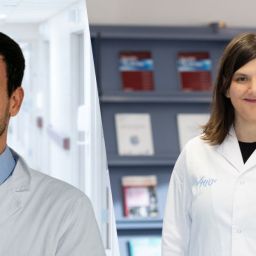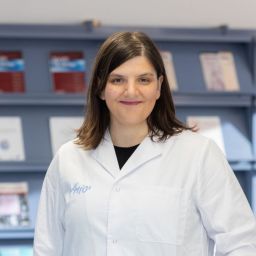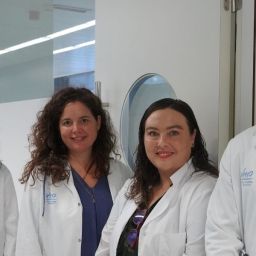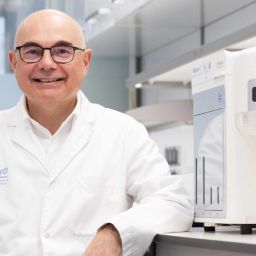

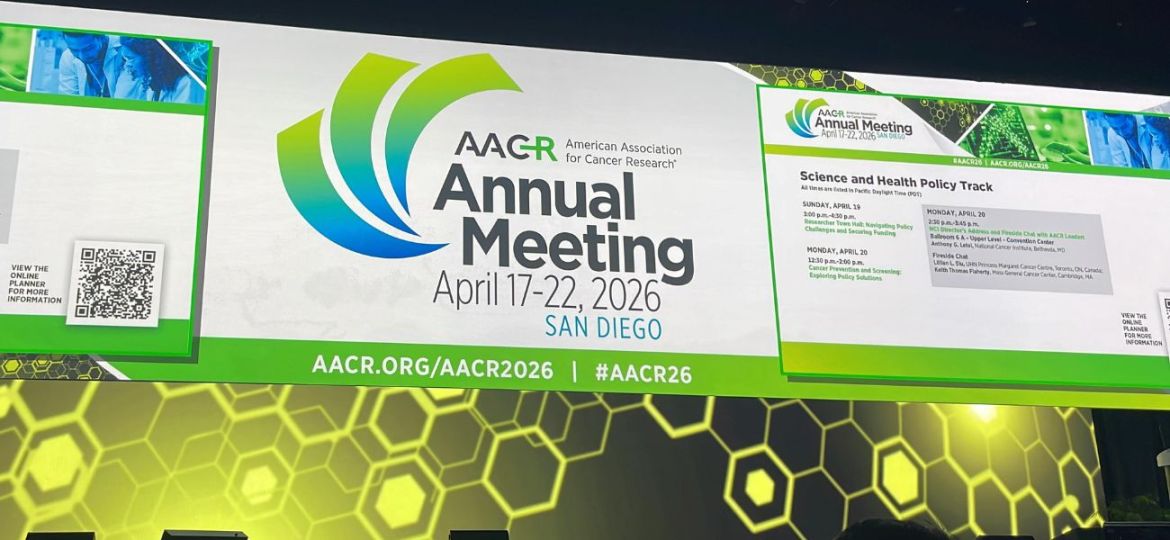
From April 17 to 22, the American Association for Cancer Research (AACR) Annual Meeting was held in San Diego. Researchers from the Vall d’Hebron Institute of Oncology (VHIO) presented several studies at one of the most important international conferences in cancer research.
Promising results from a new experimental drug in solid tumors
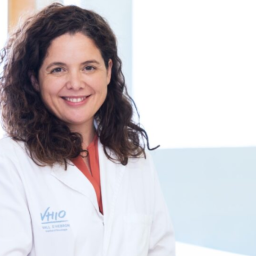
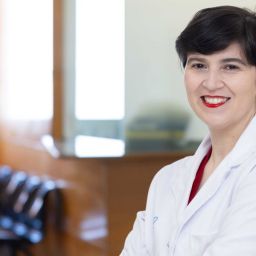
Dr. Elena Garralda, Director of the Cancer Molecular Therapy Research Unit (UITM-CaixaResearch) at VHIO, presented promising results in an oral session from a phase 1 clinical trial evaluating a new experimental drug, DKY709, in patients with advanced solid tumors previously treated with immunotherapy.
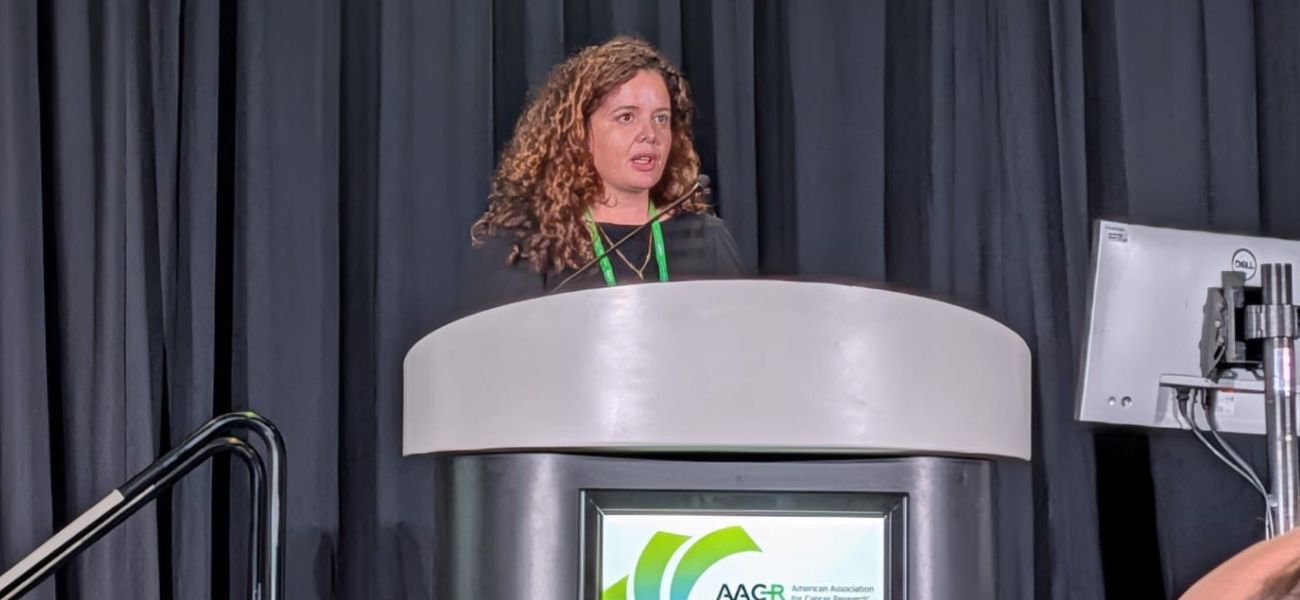
DKY709, an oral drug, acts on the immune system by reducing a type of cell known as regulatory T cells, which limit the body’s ability to mount an effective anti-tumor response. It was also evaluated in combination with an already approved immunotherapy.
In this early-phase trial, the treatment showed a manageable safety profile. Signs of activity were also observed: around 45% of patients treated with the drug alone achieved disease control (including tumor shrinkage in some cases), while this figure was approximately 38% when combined with immunotherapy.
“These results suggest that targeting regulatory T cells could become a new strategy to enhance immunotherapy, especially in patients who no longer respond to current treatments,” explained Dr. Elena Garralda.
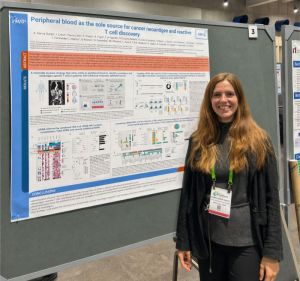
Peripheral blood as a new key source to identify tumor targets and immune cells against cancer
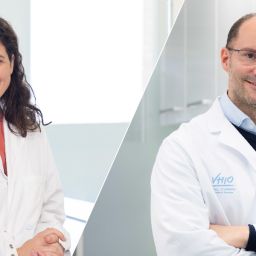
Meanwhile, Dr. Andrea García Garijo, a postdoctoral researcher in VHIO’s Immunotherapy and Tumor Immunology Group, presented a study in poster format proposing a new way to develop cell therapies against cancer without the need for invasive tumor biopsies.
The strategy is based on a blood test to identify tumor alterations and isolate immune cells capable of recognizing them. In the first patients analyzed, this approach not only identified most tumor targets but also uncovered additional ones not detected with conventional techniques.
In an analysis of 69 patients with metastatic cancer, results show that approximately half could benefit from this blood-only approach.
“This proof-of-concept study opens the door to more accessible and comprehensive therapies, using liquid biopsy as an alternative or complement to conventional biopsies,” said Dr. Andrea García Garijo.
In addition, two researchers from VHIO’s Modeling Anti-Tumor Therapies Group presented two posters focused on MYC as a therapeutic target:
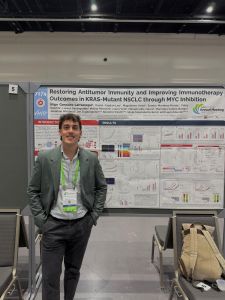
Restoring antitumor immunity and improving immunotherapy outcomes in KRAS-mutant NSCLC through MYC inhibition by OMO-103 – Íñigo González-Larreategui
This study shows that MYC inhibition with OMO-103 not only suppresses tumor growth but also reprograms the tumor microenvironment to promote anti-tumor immunity and improve immunotherapy efficacy. These findings support this strategy as a promising option to overcome immunotherapy resistance in KRAS-mutant lung cancer.
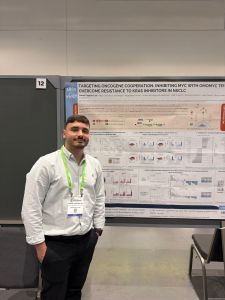
Deconstructing the paradigm of oncogene cooperation: Targeting MYC to enhance response and overcome resistance to KRAS inhibitors – Daniel Capitán-Leo
Overall, these results demonstrate that MYC and KRAS cooperate to drive tumor survival and resistance to KRAS-targeted therapies. Direct MYC blockade enhances the efficacy of these treatments and represents a promising strategy to overcome both intrinsic and acquired resistance across multiple KRAS-mutant cancer types.