

On April 28, Casa Milà – La Pedrera hosted the second session of the VHIOTalks 2026 series, titled “Innovation in Action: Phase I Clinical Trials and Their Impact on Patients”.
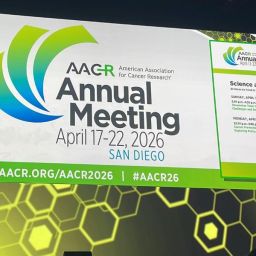
This initiative, organized in the context of the 20th anniversary of the Vall d’Hebron Institute of Oncology (VHIO) and in collaboration with Fundació Catalunya La Pedrera, brings together five talks focused on key advances in cancer research over the past two decades, a period in which VHIO has played a leading role.
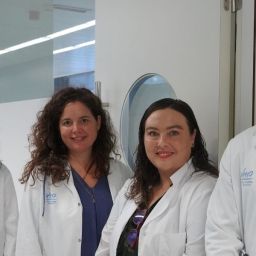
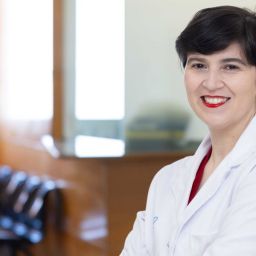
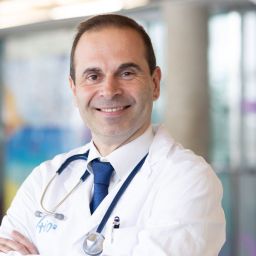
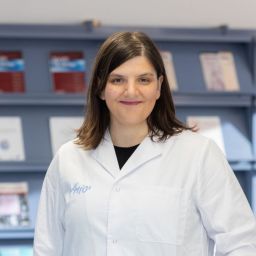
The session featured Dr. Elena Garralda, Director of the Cancer Molecular Therapy Research Unit (UITM)–CaixaResearch and Head of VHIO’s Early Drug Development Group; Laura Bascuñana, Clinical Research Nursing Supervisor; Javier García, a patient participating in clinical trials; and moderated by science communicator Luis Quevedo.
The discussion explored the evolution of phase I clinical trials—traditionally focused on assessing safety and dosage in a small number of patients—towards what experts now refer to as early-phase clinical trials. As Dr. Garralda explained: “Initially, phase I trials included few patients and focused only on safety and dosage. Today, with a new regulatory framework, more powerful drugs, and the use of biomarkers, we not only study safety and dosage, but also the drug’s activity and begin to assess its efficacy.”
Dr. Garralda also emphasized a key point: clinical trials should not be seen as “experiments,” but as rigorous tools designed to answer specific questions, always with the aim of improving cancer treatment. “They are a window of opportunity,” she noted. All speakers agreed that many questions in cancer research remain unanswered.
Javier García shared his personal experience to illustrate this. Diagnosed with colon cancer 12 years ago, he has undergone multiple lines of treatment, including three early-phase clinical trials. “Medical progress moves more slowly than the needs of individual patients, and clinical trials can offer an additional option,” he said.
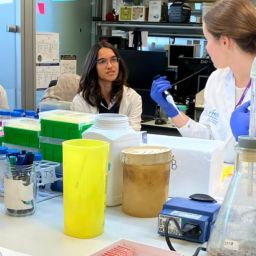
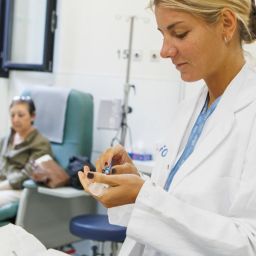
Laura Bascuñana highlighted the essential role of nursing staff in these studies. As the first point of contact for patients receiving treatments or combinations not previously tested, their work goes beyond clinical monitoring: it involves supporting, informing, and helping patients navigate uncertainty with empathy and rigor, in a context of continuous learning. According to Javier, this support translates into “peace of mind, closeness, and quality care.” He also emphasized the strong coordination between oncology teams, both within and outside the clinical trials unit.
Both Elena Garralda and Laura Bascuñana stressed the importance of specialized training and adequate resources to conduct these studies at the highest quality standards—something made possible at VHIO thanks to infrastructures such as UITM–CaixaResearch. This not only improves the patient experience but also accelerates knowledge generation and helps ensure that advances reach society more quickly.
Javier’s story is just one example. More than 10,000 patients have been treated in early-phase clinical trials at VHIO, positioning the center as a European reference. The session highlighted that, although many questions remain in cancer research, early-phase clinical trials have become a key tool both for scientific progress and for offering new opportunities to patients.