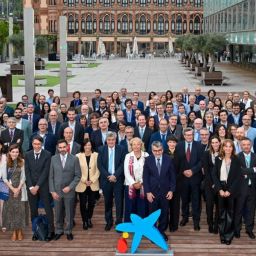

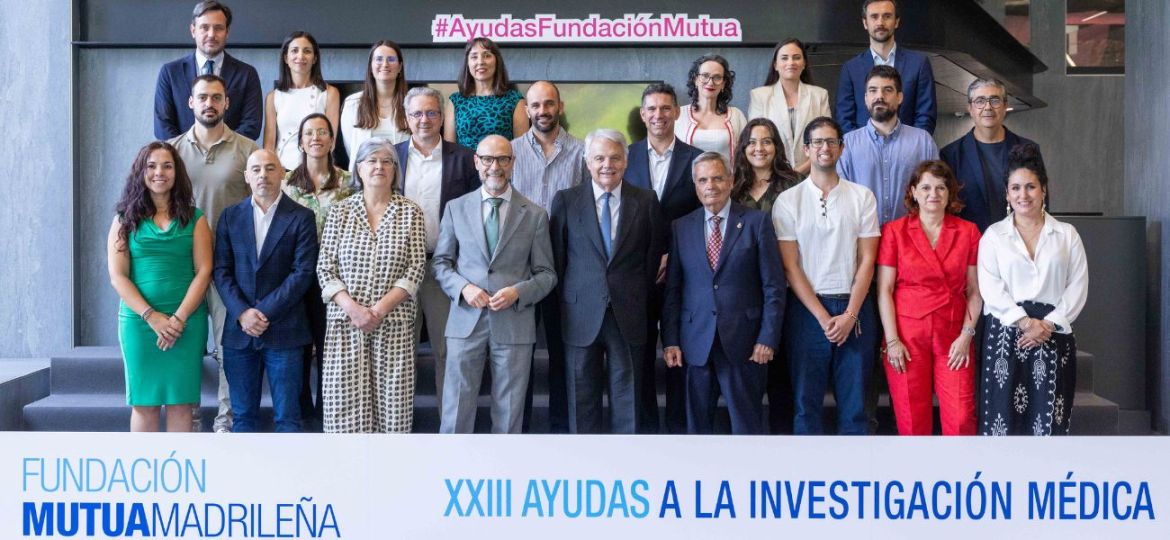
On 8 July, Fundación Mutua Madrileña presented its 23rd Medical Research Grants, endowed with 2.3 million euros, to 21 new scientific projects that will be carried out in hospitals across Spain. Among them are three research projects to be led from Catalonia, in the areas of rare diseases, breast cancer and traumatology, which will receive a total of 300,000 euros.
The projects aim to apply a new technology to improve the detection of rare diseases, create a test to detect postpartum breast cancer and develop a tool to predict the risk of death after severe trauma. The three studies will be carried out in the areas of rare diseases, breast cancer and traumatology by professionals from the Hospital de la Santa Creu i Sant Pau and VHIO-Vall d’Hebron University Hospital, in Barcelona; and Arnau de Vilanova University Hospital, in Lleida.
In addition, two other teams from Vall d’Hebron and Bellvitge university hospitals will participate in two collaborative studies with teams from across Spain in lung transplantation and mental health that will also receive funding this year.
A test to detect postpartum breast cancer
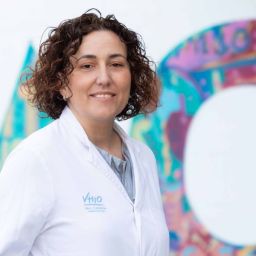
In breast cancer, Dr. Ana Vivancos, Head of VHIO’s Cancer Genomics Group, and Dr. Cristina Saura, Head of the Breast Cancer Unit of the Medical Oncology Department at Vall d’Hebron University Hospital in Barcelona and of VHIO’s Breast Cancer Group, will develop a test to detect breast cancer through a breast milk sample.
The project is based on a previous finding by these researchers, which demonstrated the presence of circulating tumor DNA in the breast milk of patients diagnosed with a tumor during lactation.
The reality is that one in every thousand pregnancies is complicated by cancer. Of these cases, 25% are diagnosed during pregnancy and 75% in the postpartum period. Breast cancer is the malignant tumor most frequently diagnosed during pregnancy. However, the physiological changes that occur in the breast during pregnancy make it more difficult to identify the tumor, worsening prognosis.
“The application of this diagnostic test through liquid biopsy in breast milk could be highly useful as a population screening tool. Just as the heel prick test is performed on all newborns, the breast milk test could be used to screen for postpartum breast cancer in a population that is currently not included in population screening programs,” explains Dr. Vivancos. “With a single breast milk sample, breast cancer could be diagnosed before the onset of symptoms, increasing patients’ chances of cure,” the researcher highlights.
More than two decades supporting medical research
Through these grants, Fundación Mutua Madrileña has already allocated 75 million euros to high-quality medical research carried out in Spain.
The 21 new projects will be developed in the areas of transplantation, childhood rare diseases, severe trauma injuries, oncology —focused this year on breast cancer— and child and adolescent mental health —focused on suicide prevention—, in some cases collaboratively, with the participation of centers from different autonomous communities. In this edition, the foundation will support the work of research teams from 25 centers in 12 different autonomous communities.
The award ceremony for the 23rd Medical Research Grants of Fundación Mutua Madrileña took place in Madrid and featured remarks by the President of Grupo Mutua and Fundación Mutua Madrileña, Ignacio Garralda, and the President of the Scientific Committee of Fundación Mutua Madrileña, Dr. Rafael Matesanz. They were accompanied by Dr. Julio Zarco, Managing Director of Hospital Niño Jesús in Madrid.
See the full list of projects that have received a Medical Research Grant from Fundación Mutua Madrileña at:
https://www.fundacionmutua.es/salud/ayudas-investigacion/