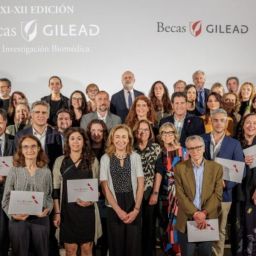

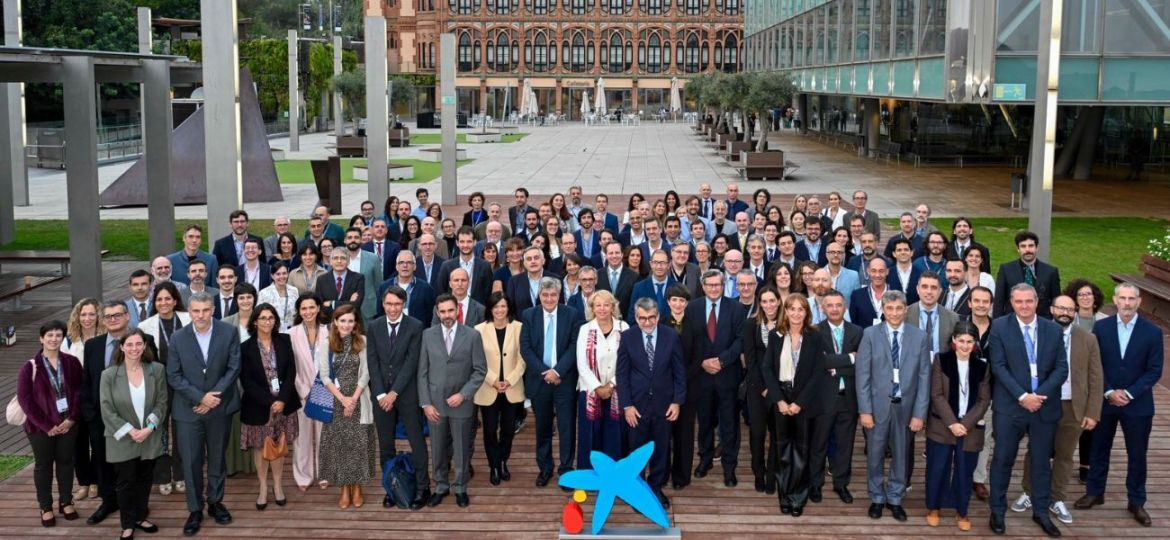
The ”la Caixa” Foundation has awarded funding to 80 new biomedical and health projects led by research centres, universities and hospitals in Spain and Portugal. These scientific projects address current healthcare challenges, from generating scientific knowledge to developing solutions with a social impact.
The 80 selected projects have the potential to positively impact people’s health, but require sustained support to develop, demonstrate their potential and be tested in real-world settings. The ”la Caixa” Foundation is therefore providing €32.4 million in funding through its competitive 2026 research and innovation calls.
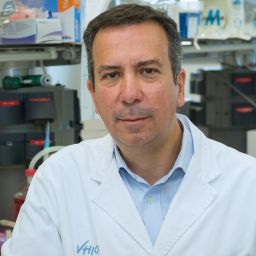
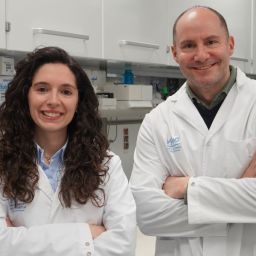
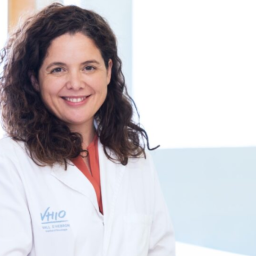
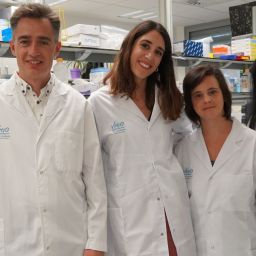
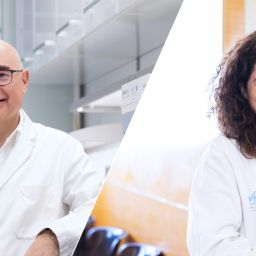
Three VHIO projects have been selected through these calls. Dr Marcos Malumbres, Director of VHIO’s Systems Oncology Programme and Head of its Cell Cycle and Cancer Group, and Dr Ana Vivancos, Head of VHIO’s Cancer Genomics Group, have each received a CaixaImpulse grant. Dr Jordi Martínez-Quintanilla, a senior researcher in VHIO’s Stem Cells and Cancer Group, is VHIO’s principal investigator on an IBEC-led project, in a consortium with the Catalunya La Pedrera Foundation and the Peritoneum Association, which has received a Health Research grant.
Developing selective inhibitors to tackle the most aggressive liver cancer
- Project leader: Marcos Malumbres.
- Funding awarded: €500,000 through the 2026 CaixaImpulse Health Innovation call.
Aggressive cancers, such as hepatocellular carcinoma, often respond poorly to treatment and rapidly develop resistance, contributing to high mortality. The neoCDK project focuses on an underexplored group of cyclin-dependent kinases (CDKs) that tumour cells rely on to survive, particularly in tumours driven by specific genetic pathways.
The team aims to develop the first selective inhibitors of these proteins as a new precision treatment option. The project builds on previous cellular studies that identified a compound with potent antitumour activity at very low concentrations, capable of halting cancer cell growth by causing DNA damage.
The next stages will include optimising the compound, testing it in animal models and preparing the programme to advance towards regulatory development. This strategy could open up new options for patients with advanced hepatocellular carcinoma and few therapeutic alternatives. It could also be applicable to other aggressive tumours, such as small-cell lung cancer, colorectal cancer and glioblastoma.
Liquid biopsy to expand access to precision oncology
- Project leader: Ana Vivancos.
- Funding awarded: €150,000 through the 2026 CaixaImpulse Health Innovation call.
Homologous recombination deficiency (HRD) is an impairment of the DNA repair mechanisms in tumour cells. Identifying this feature is important for predicting whether certain tumours may respond to targeted therapies, such as PARP inhibitors. However, current diagnostic tests can struggle to detect it when samples contain very little tumour material.
The CNA-HRD-LB project aims to provide a faster, more sensitive diagnostic tool for identifying HRD-positive tumours. The test detects alterations in the copy number of genetic material associated with this deficiency, even in samples with a low proportion of tumour cells. It is also designed for use with both tissue samples and liquid biopsies.
The test aims to be more affordable and easier to implement than current tests, with a simplified bioinformatics workflow to facilitate its integration into clinical practice. This could help healthcare professionals select targeted treatments for more patients, particularly when tissue samples are limited or difficult to obtain, and contribute to expanding access to precision oncology.
Nanocarriers to deliver drugs to hard-to-reach tumour cells
- Project leader: Samuel Sánchez, from the Institute for Bioengineering of Catalonia (IBEC).
- Project principal investigator: Jordi Martínez-Quintanilla, in a consortium involving VHIO, the Catalunya La Pedrera Foundation and the Peritoneum Association.
- Funding awarded: €999,062.77 through the 2026 Health Research call.
Pseudomyxoma peritonei is a rare cancer in which large amounts of thick mucus accumulate in the abdomen, making it difficult for medicines to reach tumour cells. Current treatments, primarily based on surgery and chemotherapy, are often insufficient, highlighting the need for new therapeutic options.
The project aims to develop nanocarriers capable of actively moving through dense mucus, reaching cancer cells and delivering antitumour drugs more effectively. Building on previous evidence indicating that active carriers can penetrate mucus more effectively than passive particles, the researchers will design safer, more precise systems capable of carrying drugs and recognising tumour cells.
The new solutions will be tested in patient-derived samples and disease models to evaluate their movement, their ability to reach tumour cells and their therapeutic effect. The project combines expertise in nanotechnology, cancer biology, artificial intelligence and disease models, and will involve patient associations to ensure that development takes their needs into account.
This technology could offer a new therapeutic option for people with pseudomyxoma peritonei and could potentially be adapted to other tumours in which mucus or tissue density makes it difficult for treatments to reach their target.