

- First results from the multicenter FUSOMAP project, led by VHIO, support the potential use of Fusobacterium as a prognostic and predictive biomarker in patients with resectable stage I–III CRC.
- Published in ESMO Open, findings show that intratumoral Fusobacterium is present in one-fifth (21%) of tumors at the time of curative surgery.
- Its presence was associated with more aggressive disease, a weaker immune response, and limited benefit from adjuvant chemotherapy.
- FUSOMAP is a three-year project is supported by the Fundación Mutua Madrileña, the Carlos III Health Institute (ISCIII), and Cancer Research UK (CRUK).
Published in ESMO Open1, first results from the multicenter FUSOMAP project, led by VHIO’s Molecular Oncology Group, show that the presence of intratumoral Fusobacterium in surgical tumor samples identifies a clinically more aggressive subtype of colorectal cancer (CRC), characterized by a weaker immune system response, limited benefit from adjuvant chemotherapy following surgery, and an increased risk of disease recurrence. These findings support the potential use of Fusobacterium as a prognostic and predictive biomarker in patients with resectable CRC.
FUSOMAP is a three-year multicenter project supported by the Fundación Mutua Madrileña, the Carlos III Health Institute (ISCIII), and Cancer Research UK (CRUK). This major observational study brings together nine Spanish hospitals across seven autonomous communities to develop microbiota-based diagnostic and prognostic models by mapping intratumoral Fusobacterium and associated gut microbiota in resectable stage I–III CRC.
CRC is one of the leading causes of cancer-related morbidity and mortality worldwide. Despite curative-intent surgery and adjuvant chemotherapy, disease recurrence occurs in more than 30% of patients with stage II-III CRC.
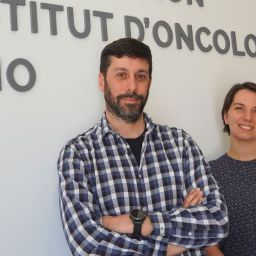
“Current risk stratification relies on clinical factors, and on anatomopathological features, such as tumor stage, grade, and the presence of venous, lymphatic or perineural invasion. However, these factors have limited value in identifying patients that could benefit from adjuvant chemotherapy, and many patients may be over- or undertreated as a result,” observed Paolo Nuciforo, Head of VHIO’s Molecular Oncology Group and Principal Investigator of the FUSOMAP study.
The search for new biomarkers in CRC
“The identification of new, complementary biomarkers that better decipher tumor biology and its interaction with the immune system could help guide personalized treatment decision-making in CRC,” said Garazi Serna, a Postdoctoral Investigator of VHIO’s Molecular Oncology Group and first author of the study. “There is growing evidence that certain bacteria and alterations in the microbiome play a significant role in cancer development, progression, and response to treatment. Previous studies involving our group2-3 linked Fusobacterium nucleatum to colorectal cancer, including its persistence in colorectal tumors and metastases, and later showed that Fusobacterium nucleatum persistence after preoperative treatment in locally advanced rectal cancer was associated with a higher risk of recurrence.”
FUSOMAP, the largest European study of microbiota in CRC, was designed as a large-scale, multicenter observational study to evaluate the clinical relevance of detecting Fusobacterium in both tumor tissue at the time of diagnosis and serial stool samples at follow-up from patients with resectable stage I–III CRC.
The investigators analyzed the association between the intratumoral presence of Fusobacterium at the time of surgery with patient prognosis and the benefit of adjuvant chemotherapy, and evaluated if the persistence of this bacterium in stool samples following surgery is linked to an elevated risk of recurrence.
Fusobacterium-positive tumors are more aggressive and associated with a higher risk of disease recurrence
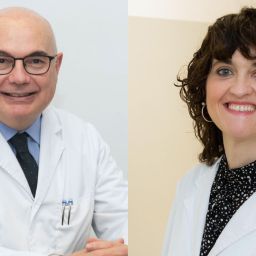
Among the 740 patients included in the study, one-fifth (21%) had Fusobacterium-positive tumors. “At a median follow-up of 48.6 months, the presence of this intratumoral bacterium was independently associated with shorter recurrence-free survival and disease-free survival. Adjuvant chemotherapy significantly improved disease-free survival in Fusobacterium-negative patients, but not in those with Fusobacterium-positive tumors,” said Elena Élez, Medical Oncologist at the Vall d’Hebron University Hospital, Head of VHIO’s Gastrointestinal Tract Tumors Group, and co-author of the study.
The study also provides the first evidence that the persistence of Fusobacterium in the intestinal microbiota following surgery is associated with an increased risk of CRC recurrence. Through the longitudinal analysis of stool samples collected at follow-up, the investigators observed that this intratumoral bacterium could be detected up to three years before relapse, pointing to its potential use as a biomarker for the early identification of patients at higher risk.
“Together, these results suggest that Fusobacterium could be a powerful tool and biomarker for personalizing CRC treatment. Its detection could help identify patients with a poorer prognosis who might derive less benefit from chemotherapy, as well as anticipate possible relapse,” added Nuciforo, corresponding author of the study. “This could help guide more personalized treatment decision making and facilitate the implementation of the most appropriate surveillance strategies.”
The study authors note that these findings should be prospectively validated in larger cohorts before they can be applied in clinical practice.
###
References
- Serna*, M. Obón-Santacana*, I. Baraibar*, F. Moratalla-Navarro, S. Napoli, F. Ruiz-Pace, N. Mulet, E. Guino, L. Alonso, L. Boleda, A. Garcia, J. Vidal, M. Iglesias, L. Aguilera, S. Landolfi, A. Fernández Montes, M.L. Lopez Vega, M. Cuatrecasas, S. Lopez-Prades, I. Gardeazabal, C. López López, M.L. Cagigal Cobo, E. González-Flores, J.L. Lopez-Hidalgo, P. Garcia Alfonso, L. Ortega, S. Rosello, N. Tarazona, R. Comas Navarro, C. Bambaren, D. Arregui, R. Fasani, P. Gallego, J. Jimenez, A. Santiago, M. Aguilera, B. Colldefolls, N. Bayó, J. Tabernero, E. Elez, V. Moreno, P. Nuciforo. Intratumoral Fusobacterium and survival in resectable colorectal cancer: a multicenter cohort study. ESMO Open Volume 11, Issue 8108342August 2026
- Bullman S, Pedamallu CS, Sicinska E, Clancy TE, Zhang X, Cai D, Neuberg D, Huang K, Guevara F, Nelson T, Chipashvili O, Hagan T, Walker M, Ramachandran A, Diosdado B, Serna G, Mulet N, Landolfi S, Ramon Y Cajal S, Fasani R, Aguirre AJ, Ng K, Élez E, Ogino S, Tabernero J, Fuchs CS, Hahn WC, Nuciforo P, Meyerson M. Analysis of Fusobacteriumpersistence and antibiotic response in colorectal cancer. 2017 Dec 15;358(6369):1443-1448. doi: 10.1126/science.aal5240.
- Serna G, Ruiz-Pace F, Hernando J, Alonso L, Fasani R, Landolfi S, Comas R, Jimenez J, Elez E, Bullman S, Tabernero J, Capdevila J, Dienstmann R, Nuciforo P. Fusobacterium nucleatum persistence and risk of recurrence after preoperative treatment in locally advanced rectal cancer. Ann Oncol. 2020 Oct;31(10):1366-1375. doi: 10.1016/j.annonc.2020.06.003.