
Why is there still no universal cure for cancer? How do researchers know whether treatment works? Why does cancer develop? What is day-to-day life really like inside a laboratory? How can I end up working at a place like VHIO?
These are some of the questions that have guided the activities of Escola i Ciència throughout this academic year. Since 2017, VHIO’s longest-running educational programme has been bringing cancer research closer to students at different stages of their education.
Once again, the programme has opened VHIO’s doors to help younger generations discover the reality of research, challenge stereotypes about science, and gain a better understanding of cancer biology by distinguishing scientific evidence from common misconceptions.
A Programme That Continues to Grow
The 2025–2026 edition of Escola i Ciència has reached its highest level of participation to date. Thanks to the involvement of more than 40 VHIO professionals, the programme engaged over 750 students from 18 educational centres across Catalonia this year, including schools from six different counties: Barcelonès, Baix Llobregat, Vallès Oriental, Vallès Occidental, Osona and Gironès.
This academic year also marked a step forward in the diversity of participants— ranging from sixth-grade primary and first-year secondary students to high school, vocational training, university and special education students —as well as in VHIO’s engagement with its local community. New additions to the 2025–2026 programme included two primary schools, two higher vocational training programmes, and one special education school located in neighbourhoods close to the institute. This expansion reflects VHIO’s commitment to creating a global impact through its research while also contributing locally to the educational and social fabric of its surrounding community.
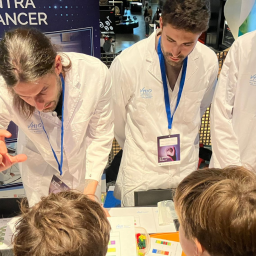
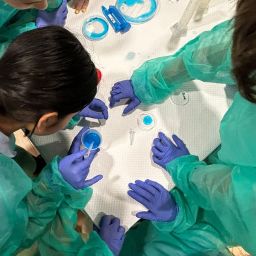
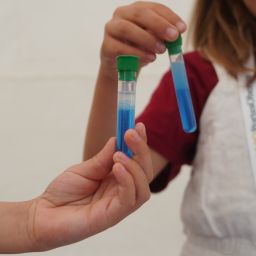
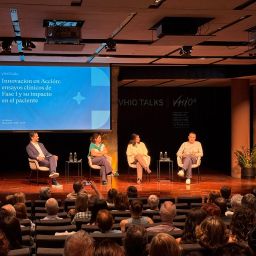
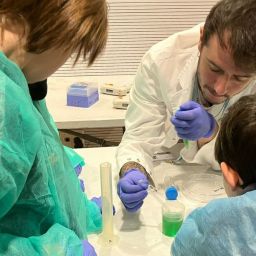
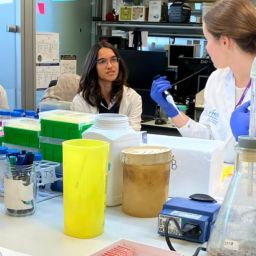
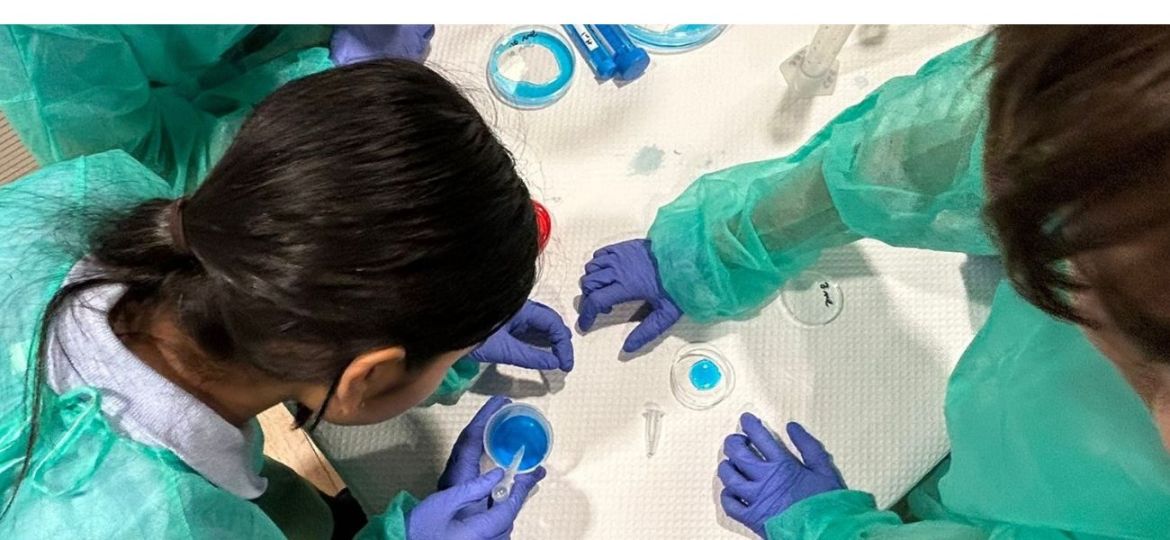
Participating groups took part in interactive talks, guided visits and hands-on workshops tailored to each educational stage. Beyond introducing key concepts in cancer biology in an accessible way, these activities encouraged active participation, discussion and the development of essential research skills, such as accuracy in measurements and the ability to identify different tissues under the microscope.
An Impact That Also Transforms Researchers
The programme not only has a positive impact on students. These activities also provide VHIO professionals with an opportunity to share their experiences and connect with the interests and concerns of younger generations.
“One of the most rewarding aspects of these activities is seeing students stop thinking that science is only for geniuses and begin to see themselves as people capable of investigating, questioning and understanding,” says Judit Grueso, Laboratory Technician in VHIO’s Experimental Therapies Group and a participant in the programme.
The different activities help break down barriers between laboratories and classrooms, showcase the human side of research, and introduce students to real scientific role models. For many participants, it is their first opportunity to discover what a research career actually looks like.
And while not every student who takes part in the programme will go on to pursue a career in research, the goal of Escola i Ciència is for each group to leave the experience with a stronger understanding of cancer biology and a closer, more accessible view of scientific research.