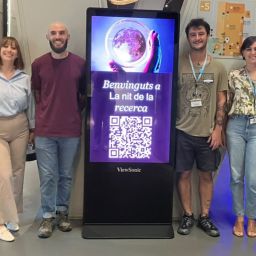


Last Wednesday, March 25, marked the end of the third edition of VHIO4STEM, VHIO’s mentorship programme that connects 4th ESO students with researchers at the research centre, giving them the opportunity to experience the reality of biomedical research firsthand.
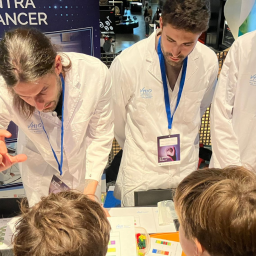
More than 107 students applied to participate, of whom 22 were selected to take part in the programme. Over four afternoons in March, they followed 11 VHIO professionals — their mentors — and gained insight into their daily work.
In this edition, female participation has been the majority in all phases of the program: 81% of applicants, 86% of selected participants, and 81% of the mentoring team have been women. This trend reflects the reality of the center itself and directly aligns with one of VHIO4STEM’s objectives: to create diverse role models and break gender stereotypes.

A hands-on experience
The main goal of the programme is to bring real science — far from stereotypes and clichés — closer to young people. Especially those who are interested in science but may not feel confident, are unsure about their future, or do not see themselves reflected in the traditional image of a scientist.
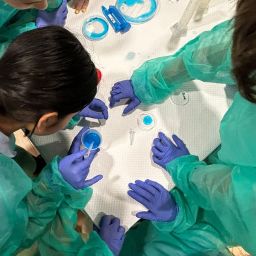
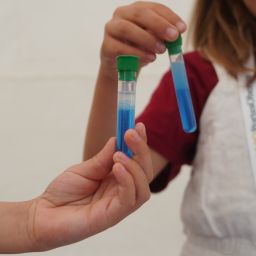
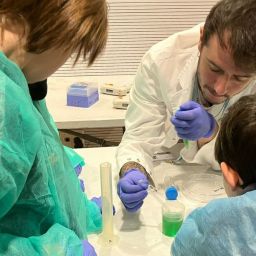
To achieve this, participants joined different labs and worked with their own hands: performing PCR, staining samples to observe under the microscope, or culturing cells. The specific experience varied depending on the mentor they were paired with, reflecting a key idea: science is not one single path, but a diverse and heterogeneous field.


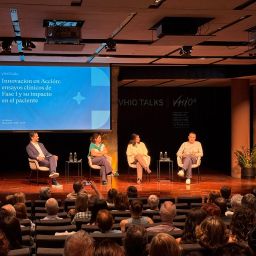
Beyond the lab, the programme also included spaces for reflection and group discussion. In the first session, students shared their preconceived ideas about science, previously collected in their classrooms.
During the following sessions, they visited key spaces involved in translational research, such as the clinical trials are at the hospital, or the animal facility. Understanding the wide range of professional profiles required for a centre like VHIO to function is essential: not all scientific vocations take place in the lab, and many of these roles are often unknown to students.
A transformative experience
The programme concluded with a final session dedicated to reflection and evaluation. Beyond the technical skills acquired, the impact was clear: most students reported an increased interest in pursuing a career in research.

Before taking part, some common perceptions included:
“Research is very individual”, “There is only one way to work in a lab”, “Becoming a scientist is impossible for me”.
After the programme, these perceptions shifted. Science came to be described as “fun, collaborative, and interesting”. Participants also realised that results take time, that patience is essential, and that “it’s okay if things don’t work out the first time”: making mistakes is part of the process.
In one of the final group activities, a student wrote on a post-it:
“From this programme I take away experience, motivation to keep researching, and (best of all) a friend”.
This sentence captures the essence of VHIO4STEM: bringing science closer, inspiring vocations, and building connections. We are delighted with the impact of this edition and are already looking forward to the next one in 2027.